It looks as if Celtic musicians at a session are all magically synchronized, intensely focused on the flurry of fast melodies and rollicking beats. Playing guitar in that setting is a surprisingly difficult thing—some tunes are straightforward and easily approached even by a musician who isn't familiar with them. But many is the Celtic tune with the kind of ambiguous chord progression that blurs by the unwary accompanist with dizzying fury.
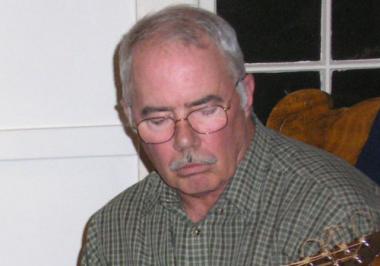
Even a well-informed, agile guitarist has to have a particular sort of musical gift to tackle the Celtic conundrum, and Kevin Sullivan has done just that. This weekend, Sullivan joins J.J. Chaisson, a young fiddler from Prince Edward Island, to bring Agawam's Captain Leonard House the pleasant furor of jigs and reels from all over the Celtic world. Sullivan recently answered a few questions about his approach to Celtic music.
Valley Advocate: What bands have you played with in the Valley?
Kevin Sullivan: I played with an Irish band called Shannon's Breeze in the '90s.
What instruments do you play?
Octave mandolin, guitar and mandolin.
What is your musical background?
I grew up on Hungry Hill and was fascinated with the Irish music at an early age. My parents used to bring me over my Uncle Tommy Sullivan's house after church on Sundays to where a few musicians would be playing; it was called a kitchen racket. I have not had much formal training, took piano lessons for a year around the age of thirteen. Been playing around with Celtic music for about 25 years (of course it's not the years but the hours that count). Last summer I spent a week in the Catskills and two weeks in Ireland and was fortunate to be able to play with some of the finest traditional musicians almost every night. I consider myself a session musician and enjoy playing in a bunch of area sessions.
What got you into playing guitar with Celtic music?
I started playing guitar in garage rock bands as a young teen and tried to play along with Irish records at home. Later I got interested in playing the mandolin at the Tuesday night session at the Liberty Café in Springfield and I was hooked! It was a great session hall and was well known at the time. We had many local musicians and some visitors passing through who knew where to find the session on a Tuesday night.
How big a part of the music scene in the Valley is Celtic music?
I think it's huge. We are very fortunate in the Valley—you can easily find three or four sessions a week to listen to. Musicians from many musical backgrounds seem to be attracted to it. Celtic music can be very challenging to learn, and it's enjoyable to play and learn new tunes in a session. Musically, I think it's like a different language, and once it starts to come together, you just don't want to stop and end up playing into the wee hours of the morning.
How do you approach discovering the chord progression that fits underneath these tunes, since they sometimes don't work with the more familiar patterns of, say, blues or country?
As I stated before, I unfortunately do not have much formal musical training, but I concentrate on listening to the melodies, submelodies, grace notes and the lilt to get a feeling of what is happening. You are correct in the fact that in some tunes the chords will seem reversed, backwards or modal in the keys you think you should be playing in. It becomes very apparent when you hit a wrong chord! So the only advice I can give is to play very quietly while you're learning, listen, and play with good musicians.
Will you be playing just rhythm, or do you play melodies as well?
I do not care too much for the rhythm aspect of the guitar, although I do use it. I like to accompany the lead instrument and try to add something to the music. It will be spontaneous. Is there any other way??
Kevin Sullivan and J.J. Chaisson play the Captain Charles Leonard House, 663 Main St., Agawam, Saturday, March 15 at 7:30 p.m. and Sunday, March 16 at 2 p.m. For tickets and info, call (413) 789-9267.