
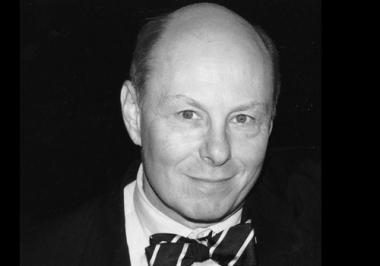
In 1888, the Bostonian Edward Bellamy published Looking Backward, a novel that imagined America in the year 2000. He foresaw a "nation organized as one great business corporation… the one capitalist… the sole employer."
That's the bad news. The good news—given that Bellamy was a Utopian who believed in the perfectibility of mankind—was that wars and corruption had been eliminated. Reading Looking Backward in 2008, you may find yourself wondering if it's satire or prophecy. Mostly you wonder, "How could anyone have been this optimistic?"
In 2008, the upstate New Yorker James Howard Kunstler published World Made by Hand, a novel that imagines America after the housing/oil/stock bubbles have burst and a "jihad bomb" has tanked the economy. Nukes have also taken out major East Coast cities and the American government, such as it is, has moved to the Pacific Northwest (since there's little electricity and only religious fundamentalists taking to the radio airwaves, nobody knows for sure). Not that it matters, because at this point Tip O'Neill's dictum that "all politics is local" becomes Holy Writ. Added to the mayhem, a flu epidemic has further depleted the population.
Robert Earle is Kunstler's stand-in (as Julian West is Bellamy's or Winston Smith is George Orwell's). Earle, a former corporate executive whose Boston job is outsourced, takes his family to upstate New York after all the bubbles burst. But encephalitis kills his wife and daughter, and his son wanders off to seek help, or a semblance of life, elsewhere. Since the U.S. dollar is worthless, pot and smoked trout are forms of currency, and people ride horses or walk (no cars!).
As grim as Kunstler's prognostication is, World Made by Hand is not a bummer like Cormac McCarthy's The Road. Anyone who has read his blog, Clusterfuck Nation, knows Kunstler is an engaging and funny writer. Amidst the apocalyptic events of World Made by Hand, he takes witty swipes at pop music, fundamentalism, Thomas Friedman, consumerism, and the fact that most of us are helpless to do for ourselves (and would, thus, survive about two days in the future Kunstler imagines). In the wake of books like Jared Diamond's Collapse and Alan Weisman's The World Without Us, a world like Kunstler's, with fewer human beings, is not an altogether unpleasant prospect.
However, beneath the satire, Kunstler is as idealistic as Bellamy. After a heinous murder takes place in Earle's village, he discovers there is no legal apparatus by which to bring the perpetrator to justice. As vigilantism spreads, Earle risks his neck to bring some semblance of civilization back to his local area, which could very well be a microcosm for Guantanamo Bay, Abu Ghraib, post-Saddam Iraq, Afghanistan, the Palestinian state. He rescues a helpless widow and her child. He exhibits, yes, family values.
Kunstler's book has arrived at a time when a National Endowment of the Arts-sponsored "Big Read" event is taking place in my area, focused on Ray Bradbury's Fahrenheit 451. Thousands of my neighbors have copies of this book and are reading and discussing it. This can only be a good thing. Bradbury wrote the book in 1953, projecting the Nazi book-burning of the 1930s onto a totalitarian future.
What are the commonalities of dystopian and utopian literature like these books? The best of this genre (Bradbury, Kunstler, Bellamy, Orwell, Huxley, Capek, Zamayatin, LeGuin) are written at times of deep political and economic unrest. And, rather than writing off mankind, they foresee, ultimately, that Homo sapiens—providing they don't sacrifice their humanity—will survive.
As Bradbury notes, "You don't have to burn books to destroy a culture. Just get people to stop reading them."
Read on!