
Since the Massachusetts Department of Public Health reported on September 23 that there was no increased cancer risk to people living near the Northampton Municipal Landfill on Glendale Road, Mayor Higgins has stated in the press that people's fears should be eased. The DPH finding came on the heels of a forum in July in which residents were encouraged to trust the expertise of Dr. Peter Shanahan, a hired consultant who contended that it is unlikely that the Barnes Aquifer would be affected by escaping leachate from the landfill.
The city maintains that it has done its due diligence, and has completed remediation tasks as required by the Department of Environmental Protection. These include elaborate leachate and gas collection systems, a $500,000 flare (to burn off the methane emitted by the landfill), and the capping of cells (portions of the landfill) that are filled to capacity. The city has picked up the bill for professional sniffers to investigate odor complaints and conducted air and water tests through other private firms and the DEP.
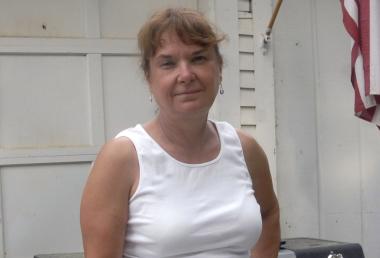
But for residents who live near the landfill, some organized in a neighborhood watchdog group called Citizens United for a Healthy Future, all the improvements the town has made aren't enough. While experts are telling them not to worry, they see evidence to the contrary every day. They still smell the odors, a mix of methane, carbon dioxide, and decomposing trash. Seventy-year old Joanne Bushie of Park Hill Road said, "I have to put my air conditioning on and shut my windows. It comes down the hill and hits my house. I smell it in my cellar."
And they see physical changes. Bushie remembers that when she was a child, she and her friends played in the brook at the end of Park Hill Road. "We used to have beautiful brown trout and rainbow trout," she said. The area around the current landfill site was once a farm owned by the Pizarra family. Bushie and her friends would walk the cows down to drink in the brook. When she started her family there, her children would play in the woods and brook as well.
But sometime in the '70s (she doesn't remember exactly when), "The brook started turning to jelly. We saw black spots on the fish and then they died." She said she feels sad, "because I remember how it was." She adds, "People who don't live here don't give a damn," a sentiment expressed by many in the neighborhood.
When Michael and Lillian Fedora moved to Glendale Road from Westfield in 1971, they thought they had found "a little piece of heaven." Mike raises and trains horses and wanted his horses to be able to travel down and drink from the brook, but sometime in the 1980s the Fedoras' wetlands became contaminated. The same thing happened to Irwin Brakey, who operates a farm and sells dairy products and vegetables from a little cart next to his house. When his cattle became sick from drinking water from the brook in 1988, he had to switch over to town water.
City officials have asserted that this groundwater pollution is not caused by the landfill. At a Zoning Board of Appeals meeting in June, Thomas Mackie, a lawyer for the city, presented a letter written in 1979 by William Doubleday, an official with the state Water Resources Commission, stating that "iron seeps" were already present in the wetlands before the landfill was built. However, at that same ZBA meeting Peter McErlain, former health director for the Board of Public Health, said, "The leachate from the unlined landfill did impact the Hannum Brook."
At the July public forum, Shanahan admitted that any existing contamination probably came from the unlined landfill, but that with the "state-of-the-art" construction proposed for the expansion, which promises a leachate collection system sandwiched between PVC liners inches thick, this wouldn't happen again. "The new standard is entombment," said Shanahan.
But Elizabeth Royte, author of Garbage Land, contends that "even the most sophisticated liners eventually leak." The same goes for the covers, which can become eroded by extreme weather and by the actions of burrowing animals and growing plants.
Robert Newton, a professor of geology at Smith College and member of the Barnes Aquifer Protection Advisory Committee, who shared the stage at the July public forum, said that though iron and manganese levels dropped when the landfill was capped in 1995, they have gone up again since that time. "Where are those things coming from?" he asked the group. Heavy metals present another problem: in one of the test wells near the landfill, Newton reported, "We saw 200 times the acceptable level of arsenic, lead, and cadmium."
For officials and experts, the first unlined cell is literally dead and buried. Decisions were made by previous administrations, perhaps with the best information they had. In 1969 the "sanitary" landfill replaced open dumps and incinerators that belched their byproducts directly into the air.
If the landfill has polluted neighborhood ground and surface water, the mayor has said it shouldn't hurt anyone, because "everyone in that neighborhood gets town water." But this is cold comfort for some of the residents who live with the reality that their wells have high levels of chemicals, that their wetlands are bright orange, and that their animals cannot drink from the brooks. Michael and Lillian Fedora would like to see their wetlands cleaned up, which is a very expensive process, but one which other cities, like Boulder, Colo. have had to go through, as their city landfill (now closed) was affecting its neighbors downstream.
The city is already cash-strapped, and has had to do some fancy footwork to make its budget for this year. Because Northampton is a regional center within Western Massachusetts, Mayor Higgins says the city wants to be a "good neighbor"—to offer a public service to the surrounding communities and get some economic benefit in the bargain.
Many residents feel that there is another motivation. Kathleen Hughes, whose daughter moved to the neighborhood recently, attended the September health studies forum and was suspicious of the presentations.
"How can you rely on someone who is hired by the city?" said Hughes. "It seems to me they are risking people's health for profit." Joseph Wernick of West Farms Road, who lives above the landfill, seems to share her opinion: "It's hard to believe that Northampton would balance its budget on the health of its citizens."
The goal of the Board of Public Works-sponsored landfill forums has been to educate and allow for community involvement. But so far it appears that predetermined positions have essentially remained unchanged. The city contends that the landfill poses little risk, and wants to pursue the expansion. The neighbors don't reach the same conclusion. They are reminded of what has happened on Glendale Road every day of their lives.