
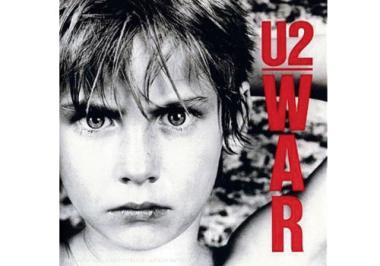
Perhaps it reveals the number of years on my clock, but I was nonetheless thrilled that Island Records just re-released expanded versions of three of the most important albums of my youth: U2's Boy, October and War. The albums, all released in the early '80s, established U2 as something unique. There were influences—Television and Patti Smith, perhaps—but they weren't all that obvious.
U2 seemed right for its time, but their version of herky-jerky New Wave stylings, of slashing, keening guitar without the power-chord emphasis that makes so much rock sound like rock, seemed to arise from the zeitgeist without clear ancestors. Add to that a sense of political outrage and spiritual searching, and you got something that quickly revealed the pop of the time—"Der Kommisar" or "I'm Bad," perhaps—for the soulless crap it was. It still seems remarkable that U2's brand of raw earnestness was eventually canonized by the lowest-common-denominator mainstream.
The most intriguing thing about this new triple release, however, is seeing how the music holds up 28 years to the week since the release of Boy. It's easy to see what appealed about the young U2 (all four of them were only around 20 when Boy came out). Boy is startling in many respects. True to its title, many of these songs fall into one of the rarest of rock categories—frank exploration of childhood. There's sinister material about dangerous adults—"old man tried to walk me home/ I thought he should have known"—and nostalgia for yet younger days: "into the heart of a child/ I can go back." Not exactly "Black Dog."
These unusual odes to childhood are driven by reverb-drenched guitar that spins melody echoing all around Bono's vocals (punchier and less soaring than his mature sounds). Adam Clayton's bass playing, never particularly virtuosic, provides a drive allowing The Edge to spend his time sending guitar lines into the farthest reaches of the Twilight Zone, and drummer Larry Mullen, Jr. never fails to avoid standard-issue rock drumming. Boy doesn't exactly sound dated—it seems like a singular emissary from the childhood frame of mind of a quartet now heading for 50.
All three reissues are remastered, though it's hard to put a finger on exactly what's different—they just sound good. Along with the remastering, fans get an instant digital version of the massive load of vinyl U2 released in their early years—B-sides, dance remixes, rare singles. It took years of intrepid effort to amass a complete collection of the original pressings of all of this material in pre-Internet days, so it's a bit surreal now to see that same rare haul available with a few clicks. (Perhaps this is what it felt like to step off a transatlantic ship in 1939 as an airliner landed nearby?) In any case, the extras on the three are a vital reason to obtain these recordings if you're a diehard fan.
The second of what seems in retrospect like a trilogy is October, a loose rambler of an album in which U2 was first revealed as religiously inclined. Here the lyrics get decidedly spiritual, from high-church Latin to nearly evangelical utterings. This was unusual territory for rock, but more unusual still in an Ireland deeply divided between Protestant and Catholic. Much has been made of Bono's Protestant/Catholic upbringing, and ever since the triumphant soar of "Gloria" first hit American ears, evangelicals have wondered if Bono really might be one of them.
The music itself continues the echo-drenched otherwordliness of Boy, but takes it into yet more rarefied territory. "Tomorrow" features the very Irish uillean pipes, and mourns Bono's mother, who died when he was just 14. The album has a late-night wistfulness about it, and a roomy, hypnotic sensibility in which songs tumble into and out of view. It's the kind of effort best listened to all at one go, and, though it's never received the attention of more bombastic efforts like War or Joshua Tree, it's a rewarding album for the patient listener.
War was the album that first put U2 on my personal radar—I saw the early MTV video for "New Year's Day," and I was flabbergasted. The Edge's guitar made sounds guitars couldn't make as far as I knew, tripping and skittering, then digging in with a fierce solidity and slow-moving melody that seemed to have nothing to do with the blues and everything to do with an ineffable coolness. The lyrics were clearly anti-war, and had nothing to do with pop fluff. Even their fairly ridiculous garb, a cross of Slaughterhouse 5 chic and two-tone mulletude, was a welcome antidote to yellow wrestling shoes and Miami Vice pastel suits. I'd found my people. And the rest of the album grew on me; tunes like "Surrender" and "Red Light" take a little getting used to for reasons I've never fully understood, since eventually I could listen to little else. The martial overkill and messianic posturing of Bono and his white flag ("drained of all color," he said) may have been cheesy, but in the era of Reaganomics and Wham!, earnest preachiness backed up with inimitable guitar sounds was a welcome relief. Mere authenticity seemed like rebellion. And for me, War defined what that authenticity looked like circa 1983. It's a juggernaut of an album, from the militaristic "Sunday Bloody Sunday" to the hymn-like anthem "40."
If you haven't heard where U2 started, years before the weird excesses of Zooropa or the packed stadiums they still enjoy, when they were still an uncategorizable bunch of punks from Dublin, these re-releases might just do new things to your ears, or even your head.