
For some reason, all the women in the Crawler's life these days seem to be named Jen. And by life, he naturally means Facebook friends.
In the Crawler's dating days, homonymously named sweethearts were a dream—it so greatly reduces the prospects of any, shall we say, misguided moniker mayhem. But all involved are married now, and for equal parts comedy and clarity, the Crawler has taken to nicknaming his Jen friends.
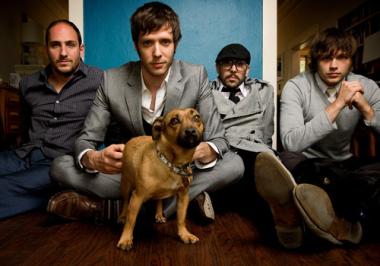
Enter "Niffer" (get it? Jen-Niffer), a Jen friend with both an uncanny knack for unearthing up-and-coming bands and seemingly ceaseless energy when it comes to haranguing yours truly about them. For months now, Niffer has been fixated on Chicago's OK Go and passing along various links and observations. Unable to deflect such dogged determination anymore, the Crawler finally conceded to check out her copious research notes.
And the truth is, while the music did turn out to be… contagiously quirky?… it was almost a pleasant afterthought. As evidenced by the following interview with drummer Dan Konopka, the band is interesting enough for the mere fact that OK Go may very well possess the modern music business plan for all newbies to follow. So here's one for—and inspired and researched by—the Niffer.
Nightcrawler: We've been hearing for years how the industry has changed for the worse and no one is buying records because of downloads. OK Go seems the antithesis to such logic in that you embrace—and owe a great deal of success to—technology. Have we turned the proverbial corner where technology is more of an asset to bands than a detriment?
Dan Konopka: Pretty simply, we realized we had to do some things differently if we wanted to survive. Knowing early on record sales weren't necessarily going to be a part of OK Go's picture of success, we knew we'd have to make more music, more artwork, take more chances and forget the old industry model. The deterring aspects of the music industry now are very much in place, and it would simply be foolish not to explore other promotional/communicative opportunities.
Your music reaches far beyond the radio, onto TV shows and even video games. How did this come about, and is such multimedia exposure the future for today's bands?
I think it's the accessibility of our sound and that within a 30-second bite the music's feeling is relatively clear. I also think licensing is now more than ever a good way to create income and gain publicity for a band. Obviously, nothing could be better for your band's popularity than getting your song on an iPod commercial or TV show—ask the bands Jet and The Fray!
I imagine other Illinois bands like Cheap Trick and Shoes are influences—is that true?
Not too sure about the group Shoes, but Cheap Trick are definitely an inspiration! In Chicago, at the time we were coming up, there was a definite scene of intense musical discipline, workmanship and seriousness. There was a lot of post-rock jazzy self-serious music going on. We thought it was great, but we really wanted to let our carefree sound be a counterpoint to all the heaviness.
Choreography is also a big part of the OK Go experience.. How did this come about?
Choreography is in OK Go blood. It came to us when we were called to do a lip synch performance for a Chicago cable access show called Chica-go-go.
Rather than lip synch and air-guitar, we thought it more incredible to do a choreographed routine to the song "C-C-Cinnamon Lips." It was pretty apparent to us that watching a band break into dance at the end of their rock show would be about as awesome as it could get.
OK Go performs at Pearl Street March 11 with opening acts Longwave and Oppenheimer.
Send correspondence to Nightcrawler, P.O. Box 427, Somers, CT 06071; fax to (860) 698-9373 or email Garycarra@aol.com.