
Warsaw Village Band
Infinity
(Barbes Records)
The Warsaw Village Band is not your grandmother's Polish dance ensemble. You won't find a polka until track nine, and good luck recognizing it! This is traditional Polish music as filtered through industrial rock, African village singing, the Delta blues, Bollywood, reggae, primal keening, Goth sensibilities and your local disco. There's not a guitar or accordion anywhere, though the group often sounds like a pastiche of Jimi Hendrix, Sweden's Garmarna and Finland's Varttina. Check out "Little Baby Blues" to get an idea of what Willie Dixon might have played on cello. Listen to the edgy raga "Circle No. 1" to hear how fiddles and dulcimers can sound like a sitar on LSD. This is as good as global fusion gets. —Rob Weir
Jake Shimabukuro
Live
(Hitchhike Records)
A few notes into this ukulele virtuoso's first live album and the long, dark shadow cast by Tiny Tim over the instrument fades. Instead, Shimabukuro offers the meticulous fingering of a few Bach inventions, some flamenco, some joyous original tracks ("Me & Shirley T") and the inventive retooling of pop classics like Michael Jackson's "Thriller." As with Kaki King, Shimabukuro's playing is percussive—he beats on the ukulele's body and fret board—and he favors intricate, quickly-played melodies. As nimble and impressive as his playing is, though, a whole show is a lot of ukulele to sit through, and by the end, I can't help wondering how Shimabukuro would sound if his instrument had as much range as he did. —Mark Roessler
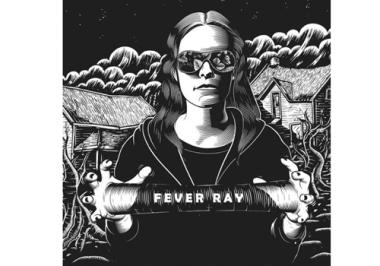
Fever Ray
Fever Ray
(Mute)
Fever Ray is a side project that feels like the main act. Karen Dreijer Andersson mines the same vein of stark synth-pop that her band The Knife mastered. Fever Ray's debut sounds like a continuation of her group's sound, featuring more straightforward vocals and less fearsomely angular rhythms. Her lyrics alternate between domestic details and eerie pronouncements, conjuring a claustrophobic, defiantly monochromatic mood. The songs are initially distinguished only by small details. Fever Ray's unrelenting gloom may be hard to stomach on a bright summer day, but it's the perfect soundtrack for a lonely night spent wondering if the sun will ever rise. —Jeff Jackson
U2
No Line On the Horizon
(Interscope)
U2 was the first band I really obsessed over—it was easy to prize their raw passion in the wasteland of '80s pop. The mid-'90s, though, threatened to derail the band into watered-down electro navel-gazing. Their albums often get hailed as returns to the U2 of old, but the four have, thankfully, never seemed to want that particular kind of return. No Line On the Horizon reveals a beautiful convergence of some of their old-school energy and an expansive, seasoned manner of constructing pop music of timeless intent. Like their best albums (for me, that's War, Unforgettable Fire and Achtung Baby), this one sounds coolly futuristic, bold and heartfelt all at the same time. If it's a return, it's simply a return to U2 music that feels viscerally right. —James Heflin