In Greenfield's recent history, there has been great tension between proponents of economic development in the form of big box stores and proponents of protecting the environment against development. That tension, no doubt, will color the June 9 election of a new mayor in Greenfield.
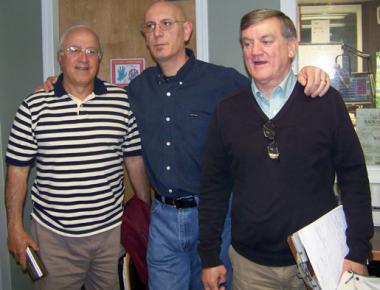
So, on the environment, what differentiates the two mayoral candidates? Al Siano and Bill Martin both agree that the development of a superstore on the French King Highway is a good idea. Martin says he wants to use the Greenfield Redevelopment Authority to revitalize the downtown; Siano supports downtown revitalization, too, and says he'd install solar panels on public buildings.
But as of early this week, neither candidate had come clean about his position on a controversial 47-megawatt biomass incineration plant proposed for the town's industrial park. The Advocate met with the candidates this week to talk about the biomass controversy.
We began by asking Siano why he supports building the biomass plant.
Siano: It's not so much whether I support the plant or not. It was brought to my attention early on—all of the benefits that that biomass plant will bring to Greenfield. It's the job of the mayor to set the tone for the discussion… Ultimately we'll make the decision based upon the benefits that it will bring to Greenfield.
Advocate: Are you concerned about the regional impact of this plant on air quality and forest resources?
Siano: Well, absolutely. All of that has to be taken under consideration. … When I was at the last meeting of the Franklin Regional Council of Governments, the question was asked: "What is sustainability?" And did you know that there is no definition of sustainability? I didn't know that. That's what the forester said… What I'm getting at, it's hard to say if we have enough wood [to burn in biomass plants] if we don't even know what sustainability is. We need more information. There are so many positive things about it. It will bring about a million dollars in tax revenue [but] there has to be an iron-clad agreement with the developer about the benefits to the town.
Advocate: You've said you've met with the developer and come away with a good feeling. Have you met with the opponents?
Siano: Yes and no. I feel that the information I got from [developer Matthew Wolfe] was valid. I understand that he is being fair and presenting solid information. And I believe that the people with a contrary point of view may have some validity. …So somewhere in between we will have to figure out what is best for our town. This lady brought me about four inches of information that I can never read. I've had people come to my house, I've met with one or two of the opponents, but not with them as a group.
The Advocate then asked Bill Martin to explain his position on the biomass plant.
Martin: I'm interested, at this point, in gathering additional information, and in ferreting out what data is accurate and what constitutes misinformation, from both sides of the issue.
Advocate: What do you see as the most important environmental impacts?
Martin: Since I'm a nurse and am very familiar with the respiratory system, and a Vietnam vet who has fought the federal government on Agent Orange exposure, I would say the biggest problem is air quality. Secondly is the impact upon people—noise, truck traffic, and other considerations.
Advocate: Have you spoken with forestry experts?
Martin: Yes, I spoke with Dr. Dave Damery, and his report was favorable. …He's from Greenfield and probably has his, I'm sure, vested interest—but he's a scientist and deals in facts. I've been to other meetings as well. I believe that fear is mounting from lack of action from the state. I was reading recently about the Massachusetts Ocean Act. We need to bring that approach to our forests and land resources; to determine what we have and how much we can use and where. If they would apply that mindset to capping the number of biomass plants in New England, that would be great. Five plants are definitely too many for our region.