
Maplewood
Yeti Boombox
(Tapete Records)
Maplewood stirs up a pot of heady harmony on Yeti Boombox, nodding toward the breezy country rock of California in the early '70s. Much of the record features swirling melodies and lazily drifting, reverbed guitar. There's a danger in venturing into such derivative territory, but somehow this Brooklyn quartet—in a few moments, at least—manages to evoke that earlier era without merely imitating it. Listening to Yeti Boombox is rather a strange experience when its harmony guitars, tweaked to the particular timbre of such '70s rockers as America or The Eagles, collide with its super-clean modern production and tight-packed drum sound. In the end, Maplewood does not entirely succeed in escaping its influences, but as a sort of modern artifact of a gone era, it provides an intriguing, if not entirely memorable, listen. —James Heflin
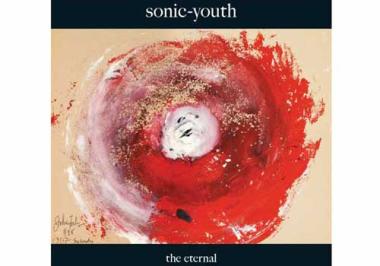
Sonic Youth
The Eternal
(Matador)
Sonic Youth's first album for an indie label since 1988 is also one of their most accessible and aggressive efforts. The Eternal offers a virtual sampler of the band's preferred modes, ultimately favoring brisk rockers like "Sacred Trickster" over lyrical guitar sprawls like "Antennae." Instead of reinventing themselves, Sonic Youth focus on writing memorable tunes while working variations on their signature sound. They experiment with surprisingly effective group vocals and new bassist Mark Ibold adds noticeably chewier grooves to tunes like "What We Know." The album is slightly overlong—weighed down by relatively lackluster tunes like "Leaky Lifeboat" and "Thunderclap"—but that's a small caveat next to songs like "Anti-Orgasm" which ring with an emotional urgency the band has been lacking forever. —Jeff Jackson
Colin Hay
American Sunshine
(Lazy Eye/Compass)
Colin Hay's doing his best to become an American, and in fact, he's been living in the U.S. for 20 years now, so he's definitely close. Still, his songs retain the observations of an enchanted foreigner, a bedazzled hobbit who's marveling at the fantastic land of elves he's found himself in. American Sunshine, while solidly in the realm of "Americana" (it was cut mostly in Nashville), still has some European and Australian flavor. His generally mellow, acoustic balladry bridges the Atlantic in a sincere, almost spiritual blend of songwriting that falls somewhere between George Harrison's and Bob Dylan's, with maybe a little Cat Stevens thrown in. He's good at telling a story, which has made his transition to this type of music very effective, and he's still got a great voice that's pure Aussie, half Eric Clapton and half Harry Belafonte. —Tom Sturm