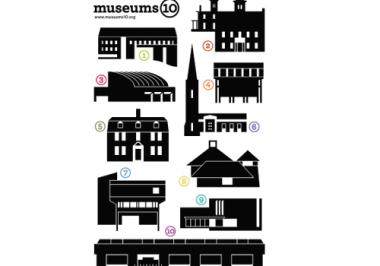
Museums10, a collaborative marketing effort of museums all over the Valley, might sound at first blush like just another of the many departments orbiting the Five College consortium, a vague if probably good campaign to promote things academic. But when it comes to the efforts of this particular arm of the Five Colleges, the whole region serves to get a potential economic boost in the form of cultural tourism. The programming offered by the organization also offers events that provide lots of entertainment and education for Valley residents.
Museums10 began modestly, according to Five College, Inc. Communications Director Kevin Kennedy. "It evolved over the past couple of decades from an initiative by staff members who wanted to get together under the Five College organization to share ideas and commiserate over problems, but it evolved into a much more formalized structure aimed at raising the profile of the members through marketing efforts and joint programming."
The program includes smaller members like UMass' University Gallery and the Hampshire College Art Gallery, and some larger institutions as well, like the Eric Carle Museum, the Yiddish Book Center and the Emily Dickinson Museum.
Bringing tourists to the Valley for longer stays and visits to more destinations is part of the plan, says Kennedy. "While someone may be aware of the Smith College Art Museum, they may not have known about the other museums in the area. They might be more likely to make an afternoon into a two- or three-day visit."
It can also be easy for Valley residents to forget just how much cultural capital resides here. The Museums10 sales pitch on its website can be a pleasant reminder of that: "In a single afternoon, where else can you spend time in Emily Dickinson's parlor, view master works by John Singleton Copley or a rare Greek urn, revisit the beloved book illustrations of your childhood, learn about Yiddish culture and early New England life, and see the world-famous Hitchcock dinosaur tracks up close?"
Museums10 has preached that word close to home a great deal over the past year, says Kennedy. "The [museum] educators as a group recently organized a workshop for Springfield teachers on the subject of object-based learning. The idea is that, rather than simply 'teaching to the test,' kids have an opportunity to look at objects. Sounds basic, but there's less and less of it going on. Because of budget limitations, kids have fewer field trips and opportunities."
Each museum that's part of the group shares with its visitors information about the other nine, and as a group, the museums have been able to reach well beyond the Valley. "We've pooled our resources to do advertising in media that even the larger museums couldn't do," says Kennedy. "Things like Yankee magazine and the New York Times. What we're working on right now is developing itineraries… say, itineraries for families, or for someone who is interested in painting and sculpture."
It's hard to know how much the Museums10 effort has aided local museums, but some indicators, no matter where the credit lies, look good. "We've been tracking the combined attendance at the museums over the years," Kennedy points out. "We don't have this year's numbers in yet, but last year's number was up three percent, and in 2007, there was a 15 percent increase. First half of this year was also a big increase."
In 2010, the group plans to work with an even wider group of businesses and institutions Valley-wide in programming dubbed "Table for 10." Participants will include restaurants, CISA (Community Involved in Sustaining Agriculture), the Western Mass. Food Bank, and WGBY public television."
For more info, visit museums10.org.