
There’s a great scene at the beginning of Doctor Zhivago when the Bolsheviks are marching through town in peaceful protest, singing songs of freedom and brotherhood while the aristocrats dance and drink in a ballroom that overlooks the street. The party goes uncomfortably quiet as the singing builds in volume, until Mr. Komarovsky, the high-born villain of the story, cracks a joke: ‘But will they still sing in tune after the revolution?’ Everyone laughs, the band starts back up, and the party resumes.
It is increasingly obvious that the outcome of the popular uprisings hopscotching their way across the Middle East will be far messier and uncertain than the fall of communism two decades ago. While virtually all of the former Soviet bloc states in Eastern Europe quickly reverted to some form of liberal democracy, none of the countries in the Middle East has any comparable tradition to fall back on. That is why, when it comes to the ongoing turmoil in Tunisia, Egypt, Libya and elsewhere, the worry is not that the protesters won’t manage to sing in tune once they’ve got rid of the strongmen, dictators and corrupt monarchs; it is that they will.
Revolutions are almost always about high-minded ideals like freedom, nationhood or the class struggle. But simmering just beneath the ideals is something more powerful and far less noble: the pull of solidarity, with a people joined in common cause, against a common enemy. You don’t have to be an old-school Bolshevik to appreciate the power of solidarity to excite the crowd. To see otherwise sensible people get taken over by tribalism and blood lust, walk down to the front lines of the next G20 protest. As Elias Canetti noted in his classic study Crowds and Power, the fire does a better job of unifying the audience than the play.
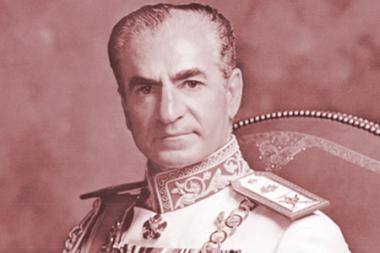
That is why the initial euphoria over the protests has given way to a great deal of hand-wringing by so-called political realists, who worry that by encouraging democracy in the Middle East we will end up acting as the midwife of fresh tyranny, helping one authoritarian regime replace another. The real model, they argue, is not the collapse of the Eastern Bloc in 1989 but the Iranian revolution of a decade earlier, where the popular student-led revolt was quickly co-opted by the religious fundamentalists. Iranians tossed out the hated shah, only to replace him with the more hateful ayatollahs.
What we want for the revolutionaries is of course what they want for themselves: Western-style democracy. The problem is that we don’t really understand how that works any more than they do. We tend to think it means something like holding regular elections or allowing the people to rule. But “Western democracy” is a misleading shorthand for our entire system of free markets, political liberalism and representative government, and to a large extent the democracy element is the least important part of it. After all, voting is just a crude device for deciding who shall govern, and there’s no evidence it delivers more effective leaders than primogeniture or throwing darts against a wall. What is really distinctive about our system is the liberalism—the basket of legal, political and social principles that include individual rights, the rule of law and the separation of church and state.
Because it’s so familiar, we tend to forget how strange and anomalous liberalism is—and how far removed from even the most enlightened kind of revolution. From Plato’s Republic to the Islamic Republic of Iran, from the French to the Russian Revolution, what they all have in common is their belief in the role of the state to promote a particular conception of the good life. This is what philosophers call “perfectionism”—the state as an instrument of the perfectly ordered society, which is itself based on a shared understanding of human nature.
But the problem is that anyone who disagrees with that particular account of the good life, or who subscribes to a different theory of what it means to be human, becomes by definition an enemy of the state. That is why all perfectionist regimes, from the Bolsheviks to the Taliban, have no use for distinctions between church and state, or private and public morality.
It’s what makes a popular uprising aimed at securing a liberal outcome so paradoxical. Solidarity might be acceptable when it comes to union activism or supporting the local sports team, but when it becomes the organizing principle of politics, it is just a prettified synonym for dictatorship. Which helps explain why things so often go awry in revolutions that start out calling for good old-fashioned liberal-democratic values.
There’s an old call-and-response comedy sketch that goes something like this:
What do we want!??
A liberal-democratic revolution!!!
When do we want it!??
After a reasonable and inclusive debate!!!
It is funny because it is preposterous. A liberal society is not a choir, and learning to let people sing out of tune is a lesson it took Europe centuries of religious warfare to take to heart. When it comes to the people of the Middle East, we can only hope that they’re fast learners.