
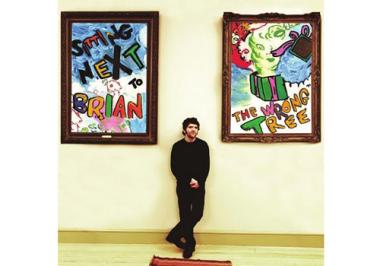
Sitting Next to Brian
The Wrong Tree EP
(Rub Wrongways)
Back again at the helm of his mystic, swirling ship, Brian Marchese sometimes seems adrift in the doldrums of identity on his latest, The Wrong Tree. Remaining are his psychedelic Brit-pop and California surf influences, but SNTB also now occasionally turns the ship’s bow into hooves—and its sails into reins—with a twist of country and Western. The usual stable of lovable misfits from the Rub Wrongways co-op (including Henning Ohlenbusch, Jason Bourgeois, Thane Thomsen and Lesa Bezo) provides the sugary icing for Marchese’s honest if oddball offerings, and the use of 12-string guitars and Farfisa organs keeps most of the production value still in the realm where The Byrds or The Zombies do dwell. The last track, “Imaginary Audience” is a bit of a rocker, and hence my personal fave on the release. —Tom Sturm
Tim Eriksen
Soul of the January Hills
(Appleseed Recordings)
During the folk revival, singers scoured the hills and dusty songsters for tales of lust, adultery, unrequited love, blood-curdling tragedy, knights, travelers, homesick sailors and imperiled maidens. Lyrics took center stage, as befits a good story. Tim Eriksen’s latest is a throwback to those days—14 a cappella songs that evoke the days of balladry and mountain gospel. His elides, dry tones, and plaintive intonations are evocative of a younger Ralph Stanley—without the band. Eriksen’s voice is a powerful instrument in its own right, though listeners weaned on thick instrumentation may find it a tough slog at first. Stick with it until the wonderment of the narratives and the ability of the voice to cut to the emotional quick take hold. Hollywood couldn’t make a better story than “Queen Jane,” nor Nashville studio tricks improve “I Wish the Wars Were All Over.” —Rob Weir
Kleenex-Liliput
Live Recordings, TV-Clips & Roadmovie
(Kill Rock Stars)
Liliput (a.k.a. Kleenex) is the greatest little-known punk band. This Swiss girl-group concocted buoyantly fun and disorienting catchy songs from sprung rhythms, clattering guitars and playground chants sung in a pidgin language. Their unclassifiable sound proved too weird and unruly for the late ’70s and early ’80s, but their riotous tunes have been slowly garnering new fans and influencing bands. Live Recordings should add to Liliput’s posthumous luster, but instead it features lo-fi, shambling, and generally inferior versions of classic songs like “Ain’t You” and “Hedi’s Head.” The package also includes a DVD of a silent film documenting their 1983 tour and several TV performances, generally more stiff than inspired. Liliput’s double-disc collected works on Kill Rock Stars belongs in any discerning music collection. This set—which includes a handful of unheard songs and fitfully impressive performances—is for hardcore fans only. —Jeff Jackson