
My brother has a pint glass that I covet. On the rare occasions that he lets me drink from it, I swear the beer tastes better.
It’s the general shape of an ordinary pint glass, but its profile is somewhere between the straight-sided American glass and the British variety with the wide hips near the top. My brother’s glass has curves like Marilyn Monroe in a sequined dress, but—if possible—even more sleek and seductive. The glass fits well in my hand and is a pleasure to hold, and when tipped back, the beverage collects in this sloped widening, as in a wine glass, offering a better opportunity to enjoy the aroma of the drink.
Recently, I’ve been giving some thought to drinking vessels, and I mention my brother’s glass less to promote it as an ideal than to offer it as an example of a glass design that satisfies on more levels than just not leaking. A well designed cup, goblet or mug can improve the best beverages, not just enhancing their flavors, but adding to the drinking experience.
The same, I feel, cannot be said for the mason jar.
The Texan in the office where I work tells me the mason jar is a staple drinking container of Southern rib joints, and indeed, I first encountered the quaint novelty at a Northern rib joint that was doing its best to feel as if it were on some sweaty bayou far below the Mason-Dixon line. Drinking sweetened ice tea out of a jar—and making believe it contained Uncle Leroy’s screech or Big Bill’s moonshine—was kind of fun the first time around. Had the precious notion stayed in the rib joints, I might not have given drinking out of jars a second thought.
But on more than one occasion lately, I’ve been served a beverage in a container that, instead of being offered up for quaffing, should have been quietly preserving fruits and vegetables on a cool shelf somewhere. And in all instances, these were mainstream, local cafes catering to common tastes—smoked pigs’ ribs were not part of the equation. (It should be noted that during a recent trip to Bub’s BBQ in Sunderland, I enjoyed my pint of Steel Rail out of a standard pint glass.)
Some Valley restaurateurs, I fear, are attempting to turn this slightly tweaked, kitshy homage to a low-income past most of us never actually enjoyed into some kind of hip, post-modern fashion statement. You know who you are—but apparently you don’t realize that the two containers are not interchangeable. Drinking out of a jar is about as sexy and useful as wearing a shoe on your head.
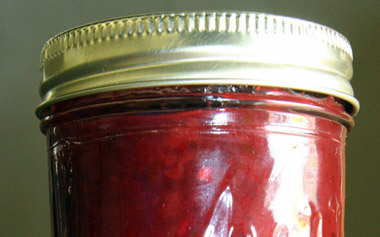
As is evident by the straws most servers stick in them, mason jars have a major failing in terms of drinking—they have too much lip. Instead of a smooth rim for the fluids to flow over into your mouth, the edge of a mason jar is the start of the spiral ridge that spins down around the top, providing a path to thread the tin top and secure it into place. This same ridge acts much like Archimedes’ water screw—a device invented by the Greek mathematician for the Egyptians to help them irrigate by lifting water up, over obstacles. In the mason jar, however, the effect is the opposite. Rather than delivering all of the beverage safely to the consumer’s tongue, it dribbles a portion onto their laps.
An even more curious (and disturbing) mutation I’ve seen recently is the mason jar with a handle on the side, like a beer stein. Presumably, this allows drinkers to get a better grip while they dirty their shirts.
In discussing my concerns with others, it’s been suggested that drinking out of jars should be embraced as a cost-savings effort, and instead of sneering at the habit, I should recognize it as a prudent use of an available object that serves a purpose.
While I can see this being an economic decision if the option is between cupping liquids in my hands or using the jar, for any food establishment seeking to impress customers with the quality of their bounty and their unique culinary instincts, I’d suggest serving drinks in glasses, rather than using a gimmick.