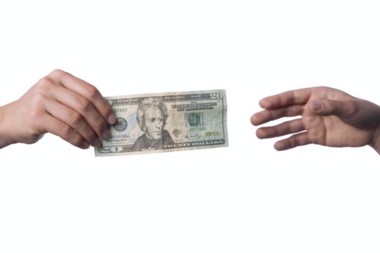
Last month, the University of Massachusetts put out a press release touting an anonymous donation of $10.3 million to the school’s College of Social and Behavioral Sciences. “This transformative gift is among the largest in UMass history,” said Chancellor Kumble Subbaswamy in the release. “The growth in research that will result from this gift will benefit society not only through enhanced educational opportunities, but also through its impact on social policy.” The story broke in a wave of re-written releases from sources like Masslive, the Daily Collegian, even the Boston Globe, without much else.
We wanted to know more about the anonymous source of funding, but when pressed for more information, administrators and University spokesman Ed Blaguszewski just kept pointing to the press release. All of our questions went begging.
“We have a very carefully constructed statement,” Blaguszewski said, again referring to the press release.
UMass isn’t setting a trend here. There’s a national Donor Bill of Rights—drawn up by several national fundraising groups—protecting anonymous donors, but student activists and faculty believe that, as the importance of these donations grows, so should the conversation about how they work. We asked general questions about these donations: who can donate? Who takes part in the negotiations and draws up the terms? How is the money distributed? No specific answers.
Sam King is a UMass student and former Media Coordinator with Divest UMass, a group working to eliminate University investment in corporations and enterprises that support the fossil fuel industry. King says it’s always hard to get information, even about private donations from known sources. “There is only a small cadre of people who have this knowledge,” he said, and “they don’t have to disclose it publicly.”
King is talking about the UMass Foundation, which handles private funding for the entire UMass system. He says the lack of openness within the foundation makes Divest’s work a bit of a guessing game. “What we have for knowledge is mostly speculation at this point,” he said.
King said in some cases, the foundation uses disclosure laws to stay “purposefully opaque” about their funding.
Andrew Mangels, Budget Director at UMass, and James Mallet, Development Director, repeatedly directed our questions back to Blaguszewski. “I don’t know,” he said, “We haven’t had a lot of questions about anonymous donations.”
Susan Davis, a senior Foundation associate, said that all questions must go through the UMass system’s marketing department first. Ann Scales, Director of Communications at UMass, said she did not know if a specific process existed.
Michael Leto, responding via an email sent through University spokesman Daniel Fitzgibbons, described the process generally. “Donors may choose to make their gifts anonymously and the university, in accordance with the national standards of the Donor Bill of Rights,” he said, “respects the privacy of those individuals as well as their wishes to designate their gifts to support a particular department, program or initiative.” Number seven on the bill details a donor’s right to confidentiality to “the extent provided by law.” The Massachusetts Attorney General’s office points out that federal law requires charities to disclose the identity of donors only on tax documentation, but the IRS treats this information as confidential.
Sam King, like others, can identify with a donor’s wish to “not take credit” for their gift to the university, but beyond that, he “can’t see any reason why they need the privacy. I’m just a fan of transparency in general,” he said.
Blaguszewski said, as part of the agreement with the donor, some details must remain unavailable to the public, but once each donation is secured, it’s treated just like any other source of funding. Based on the wishes of the donor, administrators eventually speak with faculty and students about how to implement the funds.
Megan Kingston is a graduate of UMass-Amherst and a former student trustee. She says that the trustee role, and the role students play in influencing university funding, changes according to whether the conversation is about state or private funding.
She said for state funding, events like Student Advocacy Day, when students can show up at the state house and talk to legislators, have a tangible impact. “Myself and many other students across the state play a really strong role in that,” she said. Kingston sees this work as an important factor in the latest state-funding increase. The level now stands at $519 million, a nearly $80 million jump from the previous year.
When University officials work out private donations, Kingston says students like her don’t have as much influence.
Vice Chancellor Leto, in his email, said UMass does not “seek or solicit” anonymous gifts, and that donors often reach out to the university in the hope of supporting a particular program or department. Spokesman Daniel Fitzgibbons said there is no written policy regarding anonymous gifts.
Ann Scales echoed Fitzgibbons, adding, “In most cases, we know who the donor is, but we respect the fact that the donor does not wish to have his/her name published.”
All of this behind the scenes work, according to the University news department, is one way to make up for reduced state funding. Before the fee-freeze, in fiscal year 2008, state appropriation represented 57 percent of funding for educational programs. By 2013, that was down to 43 percent.
Max Page, a member of the UMass Faculty Senate, said he sees this donation as a positive event, but once a donation is secured, the conversation should spread quickly. “It should be an open process among the faculty what that funding should be used for,” he said.
Kingston agrees that private philanthropy benefits the university system, and that benefit builds on itself. “Anything that encourages more donations is a good thing,” she said.
As far as anonymous donations go, she said that donors should be able to keep their identity private. “I do think that is within their right,” she said.
Kingston says that though students cannot know where an anonymous donation comes from, they are still a valid source of funding. “I think anonymous donations are something we should still do,” she said.
Blaguszewski adds that “quiet philanthropy” is valuable and necessary “for some people who simply want to effect change in an unassuming way.”
To date, the UMass Rising campaign, which began officially in April of 2013, has received 8 anonymous donations over $1 million.•