
By Jennifer Levesque
For the Valley Advocate
Burial Grid
“NORD Compendium”
I’ve been following Adam Kozak’s musical career since we were both in high school. Dare I say, close to 25 years later, Kozak is still one of my favorite local musicians. His latest conquest, Burial Grid, is a solo project that mixes experimental noise, electronic layers and hints of industrial and metal music. His album, “NORD Compendium,” was released this past Halloween in time for spooky season. It is eerily powerful and stunningly beautiful sounding with all its intricacies.
“It’s an album that I’ve been wanting to make for a long time, ripe with nods to the industrial and noise music that I grew up on, and incorporating my fascination with all of the obscure ways that our bodies can malfunction,” Kozak said.
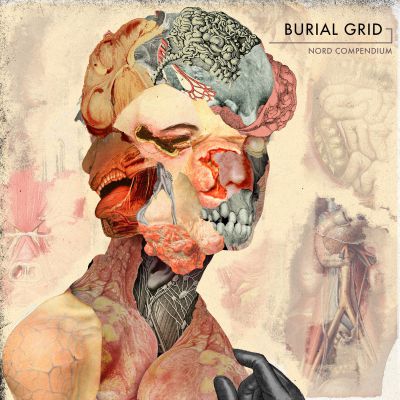
The album was to be released by an unnamed UK label, but at the last minute they dropped their commitment stating that the album cover was “too extreme.” I find that so silly because the artwork by Alex Eckman-Lawn is a remarkable piece of art that belongs on a gallery wall. Without knowing the content of the album, you immediately get that “body horror” vibe from a glimpse of the multi-layered, beautifully, grim imagery. Luckily, Kozak stood by his decision for the cover art, changed absolutely nothing and released the album himself.
With all song titles representing chapters of a medical book on rare and mostly unheard of diseases and disorders, I feel this album can also shed an educational light on the listener. I definitely had to look up every single one of these song titles while I listened and learned more than I was expecting. The “NORD” in the title also stands for National Organization for Rare Disorders (rarediseases.org). Thank you for the lesson, Mr. Kozak.
In the opening track, “Sirenomelia Sequence” the eerie-sounding electronic beats set the mood as if it’s a score to a horror film. That vibe flows throughout the entire album. (Sirenomelia, also called “mermaid syndrome,” is a congenital deformity in which the legs are fused together, giving the appearance of a mermaid’s tail.)
The inaudible vocals of “Xeroderma Pigmentosum” ring through like a fever dream in a robotic tune — the industrial influence is strong in this track. (Xeroderma Pigmentosum is a genetic disorder in which there is a decreased ability to repair DNA damage such as that caused by ultraviolet light.) The lyrics feed into that robotic manner listing off deterioration steps like overheard from an old-school walkie-talkie hidden in a room: “Then the first one falls / Like a feather in smog / Eyelash after eyelash after eyelash / Until they’re all gone / An army of welts / Marches across my face.”
The beginning of “Dejerine-Roussy” (a central neuropathic pain syndrome) has this electronic beat that is reminiscent of a child’s toy sound. Then all of a sudden the vocals emerge sounding of demon-like growls. My eyes popped wide open when I heard that and my first thought was that Regan from “The Exorcist” had appeared as a guest vocalist on the album.
For a brief moment during “Dracunculosis” (a parasitic infectious disease transmitted through contaminated drinking water) you can hear Kozak’s true voice before distorting into another one of his many vocal personalities you hear on this album. The lyrics are haunting and dark, “At night / I can feel her / Baby medinensis / Clawing her way out / Reared on me / My fears, my meat / Mother and child / Burning her way out.”
“Pseudomyxoma Peritonei” is a slow-growing cancer that causes a jelly-like substance in the abdomen. This song sounds almost like it’s being presented to you from the cancer’s perspective. The echoes bouncing off the experimental sounds cause this effect of listening to it almost like you’re under water. Definitely has a creepy vibe going on here, equipped with chills.
“Cancrum Oris” (a rapidly progressive and often fatal gangrenous infection of the mouth and face) has a metal influence in this one. It also has a darker feel to it, even though I didn’t think this album could get any darker than it already was.
Closing track “Cerebromedullospinal Disconnection” (a neurological disorder in which there is complete paralysis of all voluntary muscles except for the ones that control the movements of the eyes) is a hauntingly beautiful way to end the album. Kozak’s non-disguised vocals whispered: “Don’t let me hear / Stay with me / My body is a cop / Bury me up to my stupid scalp / Don’t let me hear / Stay with me.” Toward the end of the song it sounds like you are being sucked into a vortex with heavy vibrations, then emerging on the other side with a feeling of being at peace and calmness. Almost as if you could hear the process of the body dying, and then, nothingness.
After first listening to this album sitting at my computer writing notes, I had to listen to it again — but fully listen. This time, I laid down in the dark on my bed and closed my eyes. It was almost like a meditative state and I experienced more of a transient feeling the second time around. I definitely recommend listening to this in a similar situation to feel the full effect of this genre of music.
To check out this album and more from Burial Grid and stay up to date on any upcoming shows, go to burialgrid.com.

Eyrie House Ruins
“Eyrie House Ruins”
The debut album from local gothic folk band, Eyrie House Ruins is super catchy with darkness sprinkled throughout. Tenor guitarist and lead vocalist Rikk Desgres is the mastermind behind the band that he has been developing for about a decade.
“Over the past four or five years I’ve slowly put together the band,” Desgres said. “We’ve had a few false starts, but we finally got the current lineup about two years ago.”
Joining Desgres is Val Brown on banjo, Jay Barnes on drums, Jim Pion on bass and Kelsey Peake on fiddle. They came to a compromise of “gothic folk” when they had a hard time trying to describe what genre they fit in. “Traditional country/folk meets The Cure,” they thought. I have to agree with them, but then also add in some hints of other gothic folk bands like Murder By Death and Rasputina to the mix — that would be a good lineup for a show!
Opening track “Hate in the Name of gOD” sets the mood with deep, rich vocals with the somber, yet toe-tapping-induced instruments dancing around. I like the guitar solo midway through the song.
“Waiting Around to Die” is a cover of a sad tune by the late singer-songwriter Townes Van Zandt. I think I like this version of the song better than the original because it has more of an emotional feel to it. Another cover on the album is “Killed by Death” by English rock band Motörhead. Hearing this song the way they did it is unrecognizable, I didn’t even catch on to it until Desgres pointed it out. They made it their own, but also included some punk vibes. I love the ending with the mix of instruments morphed together in a kind of aggressive, therapeutic way.
My favorite track on the album is “The Rope Swings.” You can really hear the fiddle taking over and it’s such a treat, I don’t hear that instrument as often as I’d like. It’s also one of Degres’ favorites on the album as well.
“This song is about how in the past communities would gather to watch a hanging,” he explained. “The particular vibe of this song is also where I hope the second album is more like.”
It has this witchy sound when you know the premise behind the song and I look forward to the next album to hear more like this.
“Finnegan’s Drink” has some indie rock elements going on, which reminds me of Sonic Youth. I love how “Cyanide Bride” sounds so elegant and beautiful and the lyrics are just really, really dark. “I was oblivious, I was in love / There’s another body to be disposed of / She’s my cyanide bride / Got nowhere to hide.”
Listening to the album made me want to see them perform live and they will be playing First Night in Northampton on New Year’s Eve. Check firstnightnorthampton for timeslot and location and eyriehouseruins.bandcamp.com to listen to this album for yourself.