
One of the great side benefits of living in an area where presenters really care about film is that those same people also really care about the people behind the cameras. It’s not at all unusual to find writers, actors, producers, and directors visiting the Valley to take part in a discussion about one (or more) of their projects, often in conjunction with a local college or film group. It’s easy to take it for granted—I’ve seen people walk out during the credits while a filmmaker waited to talk about his work—but for those interested in the underpinnings of creative work, talks like these are a rich and irreplaceable thing. And this week, Valley filmgoers can choose from more than one.
First to the screen is Northern Borders, a 2013 film that paints a portrait of New England in the 1950s—specifically, Vermont, where the movie was also filmed. Director Jay Craven, who will be on hand for the Friday night screening at Shelburne Falls’ Pothole Pictures—has had a long career as part of Vermont’s creative arts scene. Co-founder of the Circus Smirkus troupe, his output also includes an Emmy-winning comedy series, public radio programs, and years spent inspiring students as a professor of film studies at Marlboro College.
Northern Borders, based on the novel by frequent collaborator Howard Frank Mosher, is the story of Austen Kittredge, a young boy sent to live with his grandparents on a sprawling farm. There, the city-bred Austen gains a new sense of adventure as long-kept secrets begin to bubble up through the family lore. As change—and electricity—come to the region, an older generation fight to keep some of their own traditions alive. The screening in nearby Shelburne should provide a fertile setting for discussion about the area’s history, and as an added bonus, Craven will be bringing some Vermont cheese to share with the Friday night crowd while they chat about the film.
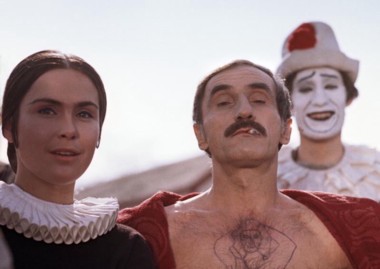
On Monday evening, Amherst Cinema teams up with the DEFA Film Library of UMass Amherst for a presentation of Siegfried Kühn’s 1986 film Childhood. Screening as part of DEFA’s 2014 Artist-in-Residence program, the film is one of six Kühn works the film library is bringing to the area in October and November under the title Seeking Transformation: The Films of Siegfried Kühn. Born in Breslau, Germany in 1935, the director worked in both Moscow and Berlin before joining the East German DEFA studios in the late 1960s. After finding early box-office success in with a hit romance, Kühn’s next feature, The Second Life of Friedrich W.G. Platow (pictured), was denounced by East German officials, who felt it showed a “distorted image of the working class.”
“The heroes of my most important films are people who want to break out,” says Kühn, and the characters at the heart of Childhood are no exception. Young Alfons is living on a farm with his grandparents at the tail end of World War II when a traveling showman stops in the village. In an insular environment whose instinctual reaction to strangers is suspicion and hostility, Alfons and his grandmother find that their lives are rewritten by the newcomer’s arrival. The film—perhaps Kühn’s most autobiographical, it draws heavily from his own childhood experiences—will be introduced by Barton Byg of UMass-Amherst.•
Jack Brown can be reached at cinemadope@gmail.com.