
By Jarice Hanson
For the Valley Advocate
One of the most common terms in theater parlance is the “old chestnut.” This is a type of show that has been around a long time and often has themes, music, or values that are guaranteed to encourage potential audiences to plunk their money down on a ticket and see something they already know they will like. Every theater company considers adding at least one old chestnut to their season, and usually a director will choose to interpret the show in a new way — not so new as to disappoint the audience, but new enough to breathe some fresh air into an older property. In this edition of Theater Matters, I’ll identify two old chestnuts brought to the boards (another theater term) in our region this summer.
‘Camelot’
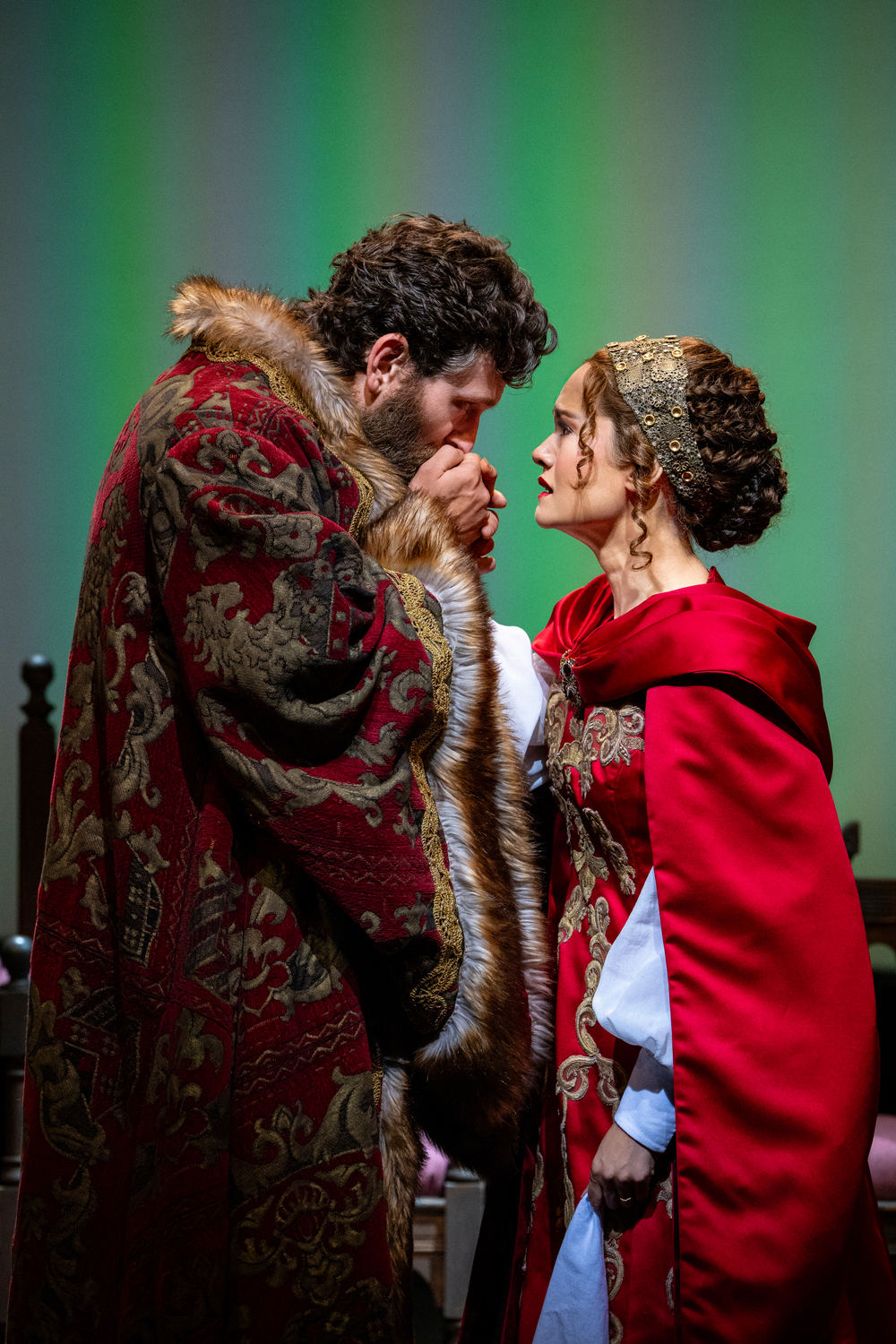
Photo by Daniel Rader
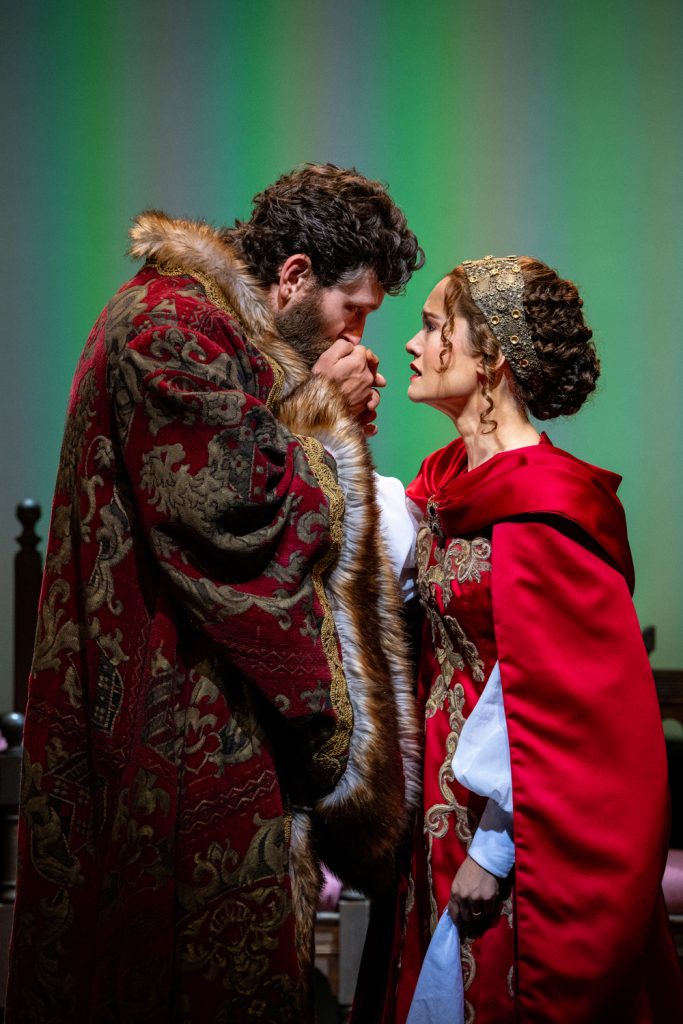
Ken Wulf Clark as King Arthur and Ali Ewoldt as Guenevere in “Camelot.”
When I attended the opening of “Camelot” at Barrington Stage Company’s Boyd-Quinson venue I wondered how the magnitude and pageantry of “Camelot” could be brought to a regional theater.
When “Camelot” appeared on Broadway in 1960 with Richard Burton, Julie Andrews, and a newcomer by the name of Robert Goulet in the iconic roles of King Arthur, Guenevere, and Lancelot, it won four Tony Awards. The show featured a book by Alan Jay Lerner and music by Frederick Lowe — two Broadway legends of musical theater.
A popular film appeared in 1967, and was nominated for five Academy Awards, winning three, and as I remember, the romantic theme made it the perfect date night movie for high school students. The stars included Richard Harris, Vanessa Redgrave, and Franco Nero in the leads.
This year, the Barrington Stage Company’s artistic director, Alan Paul, brought “Camelot” to the Berkshires in an updated, slightly different configuration. As director of this production, Paul referenced themes of democracy and respect as the ideas that contributed to “Camelot’s” timeless nature, and talked about how sometimes, artistic properties become synonymous with presidents, in this case, the administration of President John F. Kennedy.
Upon entering the theater I was struck by the lack of color on stage. As the spare set was revealed and King Arthur, played by Ken Wulf Clark, began the first notes of “I Wonder What the King Is Doing Tonight,” I realized that this production would feature the individual players far more than the pageantry and spectacle of any other production I’ve seen. In this case, detail and pageantry were largely provided by the brilliant costumes made by Lia Wallfish and Ana Kuzmanic.
Clark’s King Arthur evolved as a man who continually learned through his epiphanies, especially in terms of human nature. Arthur, contrasted with Lancelot, played by Emmet O’Hanlon, vied for the attention of Guenevere, forming one of musical theater’s most interesting love triangles. The original story placed Guenevere in the center as the seductress, but in this production, the romance seemed less grounded in desire, and more in conquest.
If the BSC show did seem lacking in some way, it was due to the Lerner and Lowe music that has not weathered the test of time as well as other parts of the script. I confess, I cringed when I heard the words to “How To Handle A Woman,” but I was still carried away by the romantic lyrics of “If Ever I Would Leave You.”
Still, “Camelot” at BSC had enough of the charm and romance to remind audience members that “once there was a spot, known as Camelot,” and in remembering the romance of a time when all things were possible, was a lovely way to spend an evening in the theater.
‘Singin’ In the Rain’
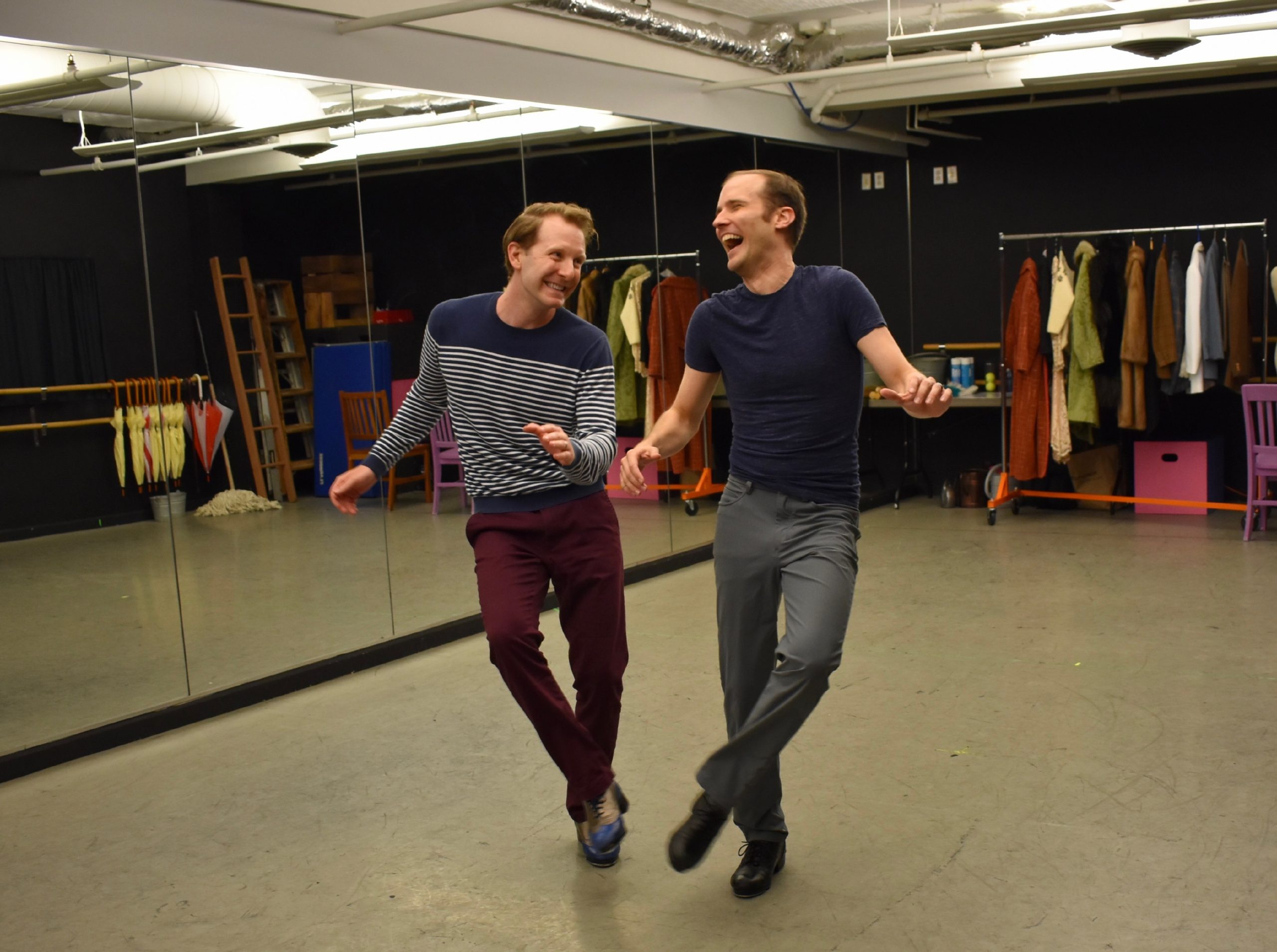
Photo courtesy Playhouse on Park
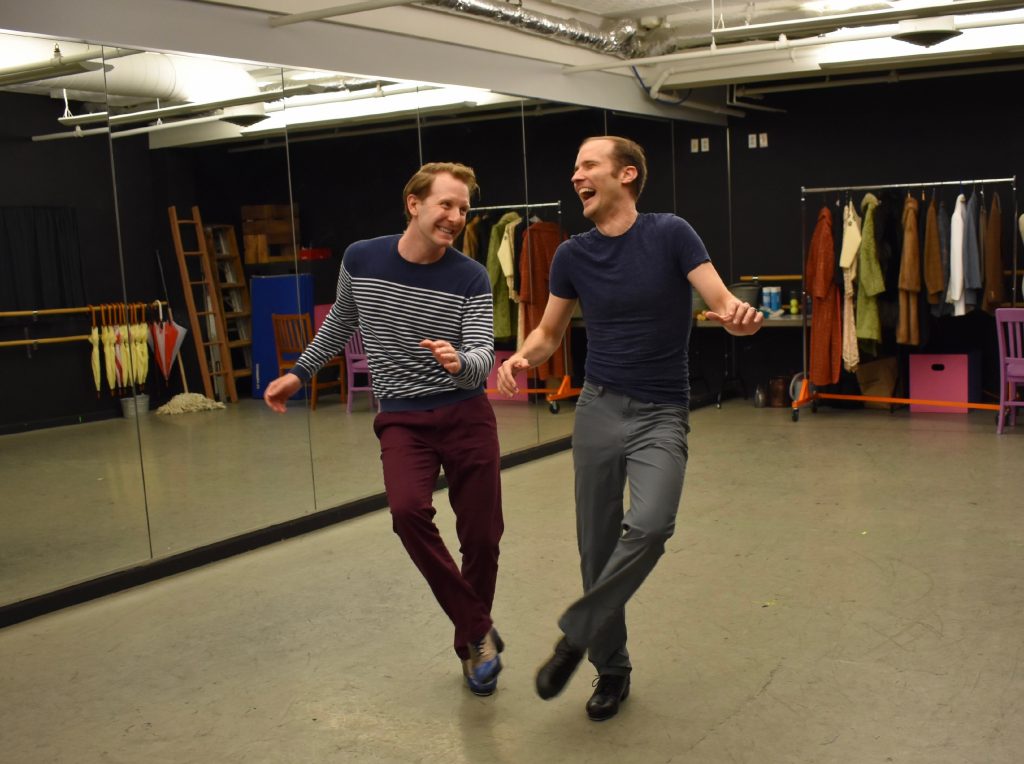
Rehearsal photo of Daniel Plimpton as Don Lockwood, left, and Robert Mintz as Cosmo Brown in “Singin’ In the Rain.”
An entirely different treatment of an old chestnut at the lovely little Playhouse on Park in West Hartford reimagined the Gene Kelly, Debbie Reynolds, and Donald O’Connor film on a theatrical stage. The famous screenplay by Betty Comden and Adolph Green was directed by Evan Hoffmann, who put together a very talented group of young actors who were probably far too young to ever see the old film about the introduction of the “talkies.” But when it came to athleticism, song, and dance, this show did not disappoint.
In the lead as Don Lockwood was Daniel Plimpton, a former Valley resident who cut his teeth on song and dance in the Pioneer Valley. His tap dance work along with choreographer Robert Mintz, who also played Cosmo Brown, and Lindsay Gloriana Bohon as Kathy Seldon, was every bit as fresh and original as the very popular film from 1952.
While the two-and-a-half hour show spent the first 20 minutes explaining the challenges to actors in Hollywood wrought by the advent of sound, and could have been shortened, the show exploded with creativity to remind audiences what classic tap musicals could be. Plimpton recreated the famous Gene Kelly song and dance of the title number with other actors helping simulate rain. For example, an actor held a watering can high above the tapping “Lockwood” until the stage, at the upper portion of this arena theater, erupted with a full curtain of rain.
Some of the famous scenes, like O’Connor’s “Make ‘Em Laugh” dance and the scene in which all three leads leap onto chairs, only to roll and collapse on the ground, were every bit as thrilling as those scenes in the film. In general, this reimagining of an iconic film for a small stage with young performers really showed how old chestnuts can still deliver excitement and originality when treated with such care and talent.
Spotlight on Daniel Plimpton
Matt Simpkins Photography
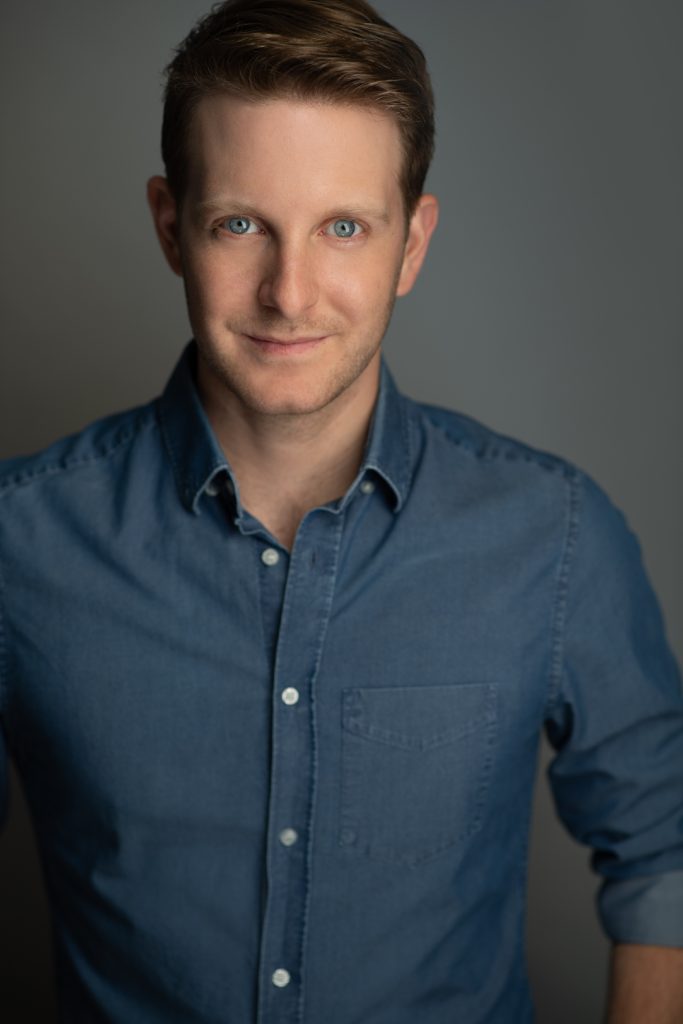
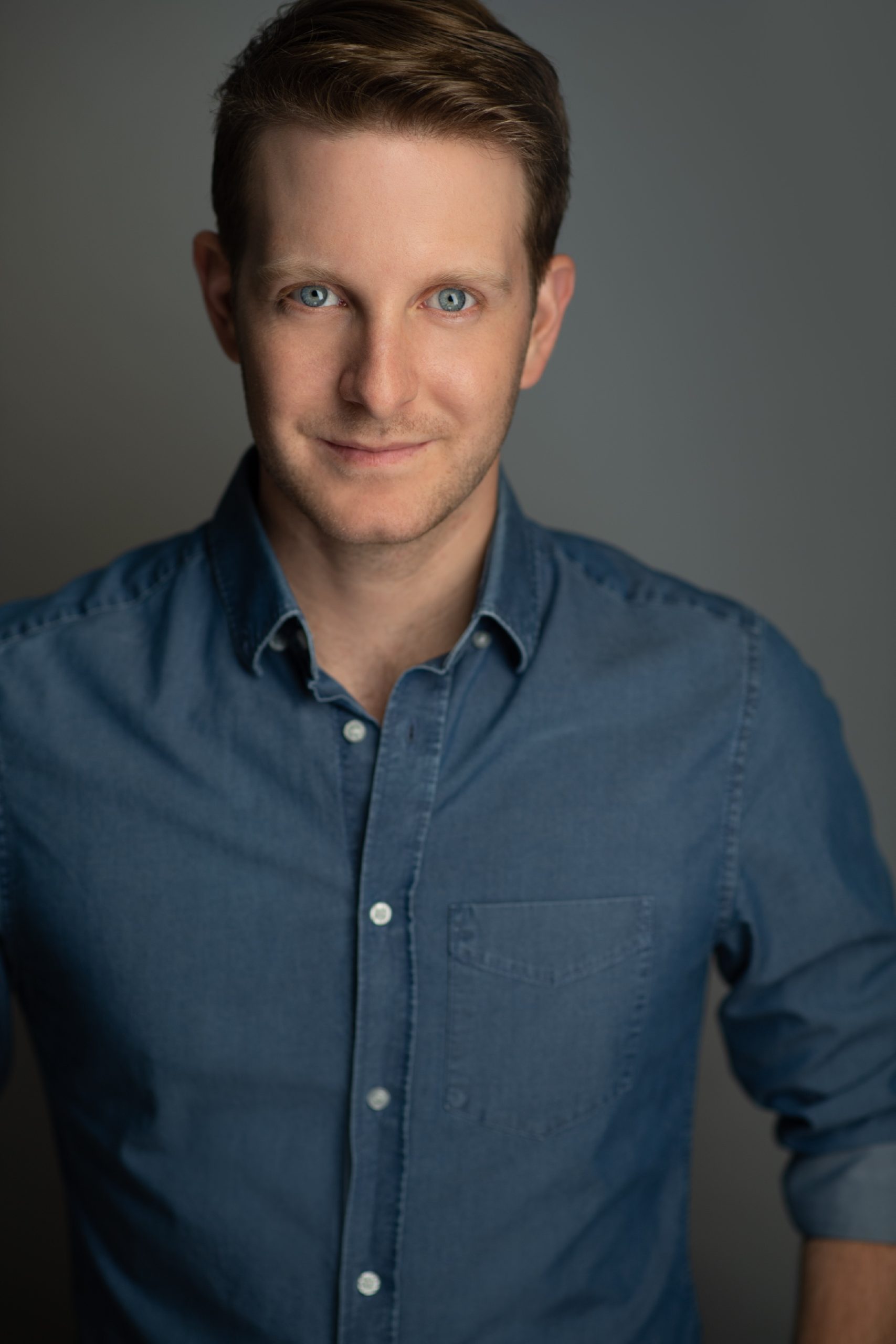
Daniel Plimpton
I remember Daniel Plimpton in his countless roles as a child actor in Valley productions with Amherst Leisure Services and the Starlight program to West Springfield’s Majestic Theater. I asked him about how he had prepared for a career in theater.
After graduating from PVPA in 2008, he received a BFA at the Boston Conservatory. Studying the craft in the Valley, he spent hours working with talented teachers who helped cultivate his talents. He identified Mitch Chakour, who directed him often, as teaching him about music and expression. He added: “I adore that man.” Tony Lechner taught him specifics about musicality and learning to read and sing complex harmony and music. And when it came to tap dancing, David Bovat was his first teacher. “I had no idea at the time that tap would be such a big part of my career,” he said.
Daniel will soon be leaving to perform “Willy Wonka” for six months in Asia, but what impressed me most was how down-to-earth he has remained as a person. When I asked what advice he has for young actors looking forward to a career in theater, he said: “Dig deep within yourself to see what each moment means to you and let that flow out of you in your expression of emotion, character, and story. And lead with love — both with those around you and with yourself.”
Those wise words come from one of the Valley’s own, and that’s why Theater Matters.