“That which we call a rose by any other name would smell as sweet.” I’ll take some poetic license with ol’ Will Shakespeare: “That which we call a rosé by any other name would smell as sweet.”
But here’s the thing: rosés aren’t always sweet, either in smell or in taste. People of a certain age often think pink wines are going to be sweet due to the dominance of the infamous White Zinfandel. White Zinfandel was created by accident in 1975 when Sutter Home winemaker Bob Trinchero was trying to concentrate the flavor and color of actual Zinfandel (a red grape) and drew off some juice. Because that juice had only been in contact with the skins for a short period of time, it looked pink instead of red. The fermentation process also arrested; rather than the sugars in the juice converting into alcohol, they stayed sugar and stayed sweet.
Thus, a whole new category of wine for your Nana and your Aunt was born — or at least for my Nana and my aunts. Many a family gathering ended with an underage Monte getting to take a few sips of White Zinfandel from a bottle that had been left open in the fridge for far too long.
White Zinfandel is gross, and it gave rosé as a category a bad reputation. But my Nana’s generation is gone, and my aunts’ generation is following closely behind. Kids these days don’t have the same hangups about drinking pink as some of us older folks do; they want to “rosé all day.” The durational nature of that statement aside, it’s refreshing that the nature of rosé — as a lighter take on red wine — is no longer verboten.
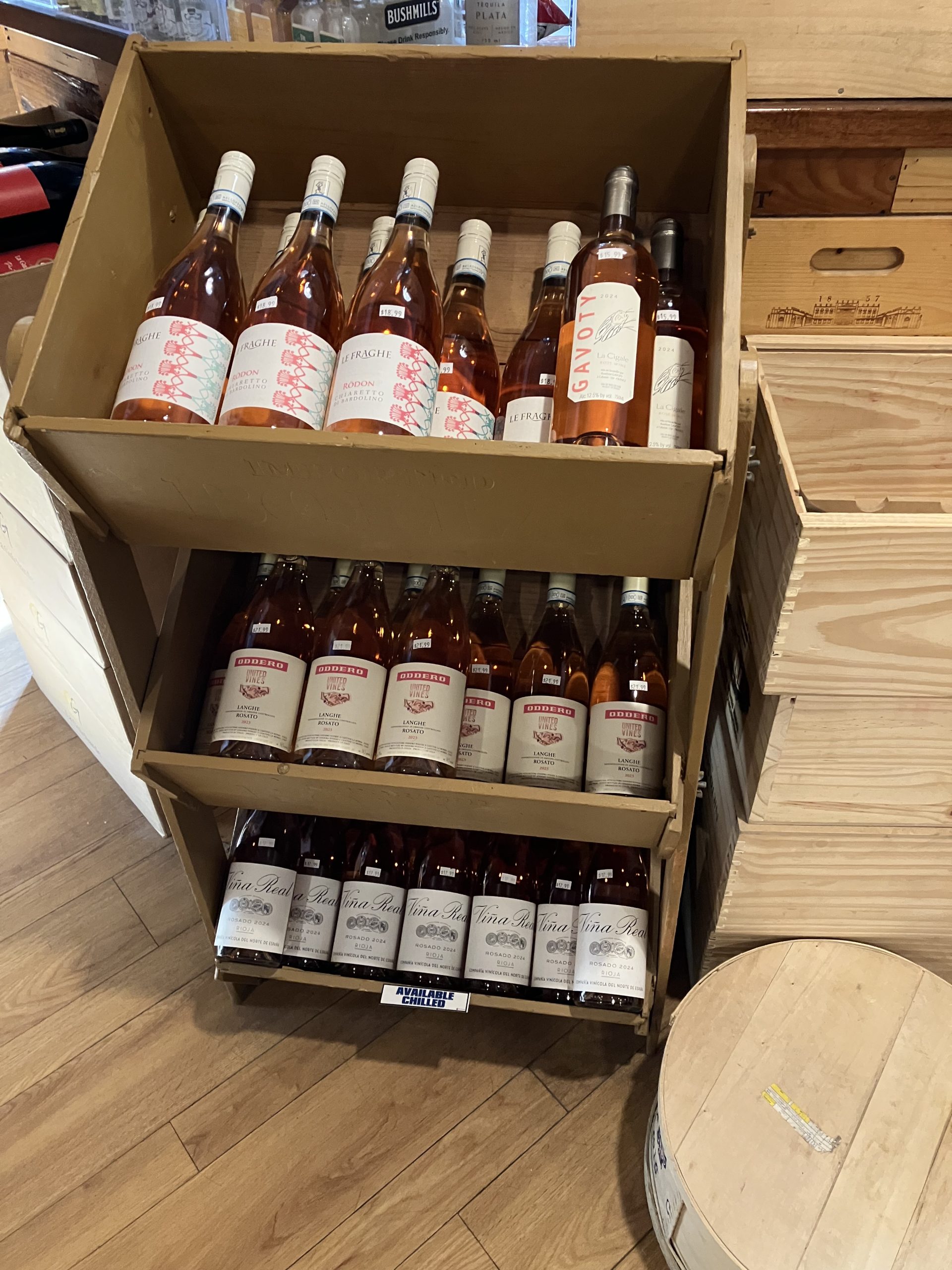
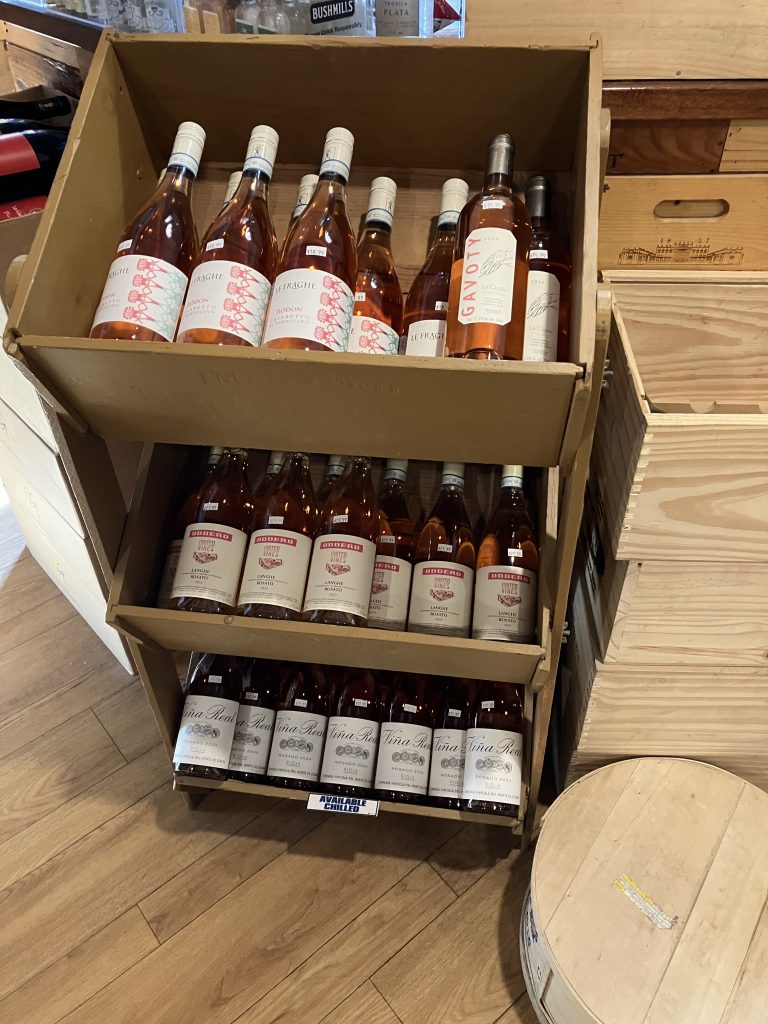
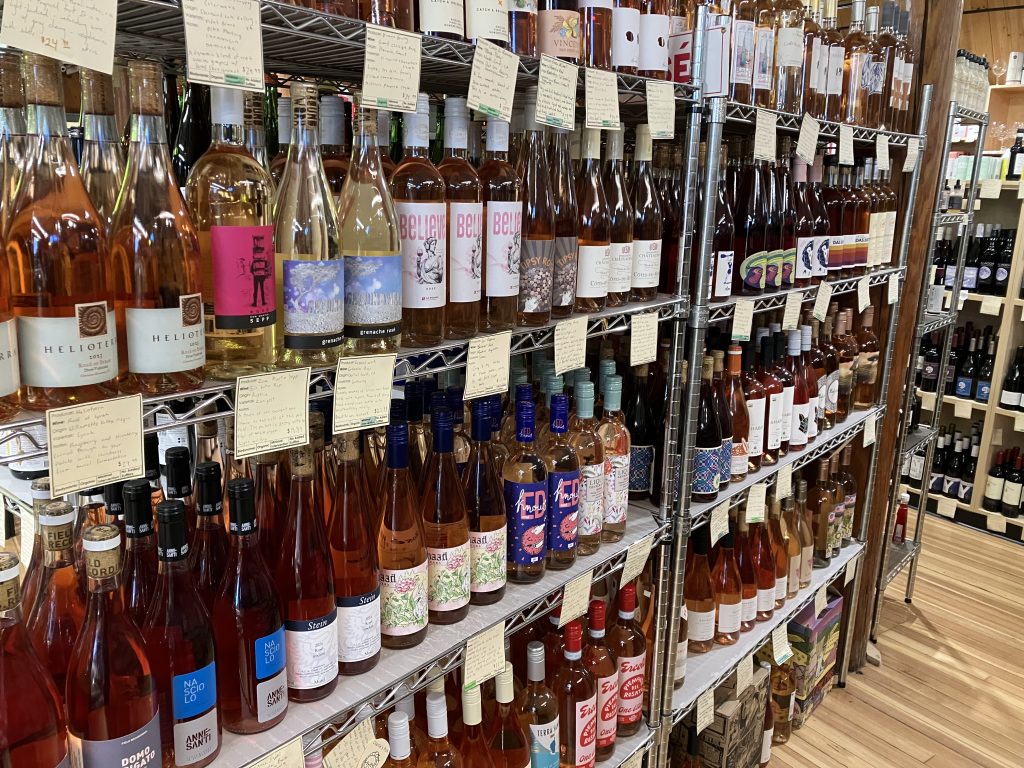
State Street Fruit Store in Northampton also offers a variety of rosés.
MONTE BELMONTE / For the Valley Advocate
And the process of leaving grape juice in contact with red wine skins for a short period of time is exactly how rosé is made; it is not a blend of red and white wines. While I think of rosé as a year-round wine, spring is the time when many American wine drinkers start to “think pink” and drink. I’ve asked some of my favorite Valley wine folks to weigh in on this year’s arrivals and recommend some of their favorites.
Sharon Swihart is the wine buyer for Four Seasons Wine & Liquors in Hadley. Sharon writes: “When it comes to rosés, my first thoughts run to sparkling varieties. They can be serious or casual; regardless, they are always beautiful in the glass. Two customer and personal favorites fit these slots perfectly. Jansz “Premium Rosé” is a Brut from Tasmania with hundreds of years of French winemaking tradition behind it. The wine is indistinguishable from a French Champagne. No wonder: the Jansz label started life as a joint venture between Roederer and the Jansz family. Once established, Jansz bought Roederer’s half. For $30, this is an exquisite quaff: bramble berries dusted with earth, followed by a classic yeasty, toasty Champagne finish. This is a bestseller at our rosé tastings, even against much less expensive still and bubbly options.”
Bubblies are meant to be enjoyed in every situation. Archer Roose “Bubbly Rosé” ($18.99/four 250ml cans) hails from Veneto, Italy; however, these bubbles are distinctly drier than a Prosecco’s. This is the perfect aperitif; we split a can every night while making dinner. It is also ideal for picnics and any other casual situation. It is not hyperbole when we say, as we savor our first sip each night, “This wine really is that good.”
When it comes to dry rosé, Hiruzta’s Txakoli Rosé ($21.99) is hard to beat. This is, after all, the label deemed by multiple entities as “the best white wine in the world,” scoring 100 points in a couple of instances; their rosé is every bit as good. While we don’t normally buy into the points system, we’ll make an exception for Hiruzta. Overlooking the Bay of Biscay, the vineyards benefit from the salt air and fog. The resulting rosé is crisp, minerally, and precise, yet quite flavorful. While it is the quintessential tapas quaff, its charms stretch far beyond a single application. As dry as it may be, we would pair it with all but the spiciest of dishes.
Spicy, you say? Well, we have the perfect wine to carry you through summer’s grilling season all the way into fall: the Roos Family’s “The Strawberry” Pinotage Rosé ($14.99). This is an unfortunately misleading name: the wine is not strawberry-flavored. Once we get past that little distraction … this is a full-bodied yet dry rosé that will complement just about any bolder, spicier meal. Imagine that: just four wines and your entire rosé needs, now through Thanksgiving, are covered. Cheers!
Ken Washburn — level two sommelier, wine buyer and general manager of the only store in Leverett (The Leverett Village Co-op) — is playing fast and loose with the rules of rosé. After everything I said about rosé not being a blend of red and white wines, Ken writes: “Okay, sorry readers — this is not technically rosé according to the wine powers that be (Europe), but if it looks like a duck, walks like a duck, and is a blend of 25 white and red grape varieties, Monte said it could be included here. UIVO Renegado is such a showstopping wine and made in such an unusual way: spontaneous wild yeast fermentation in granite, on the lees for six months, and aged in chestnut oak and more granite. Totally unfined or filtered. On the nose: strawberry jam, lemon curd, waxy candy. On the palate: unripe strawberry, Pop Rocks, dry leaves, wet stone. Super juicy but still dry. Everyone should be drinking more Portuguese wine!”
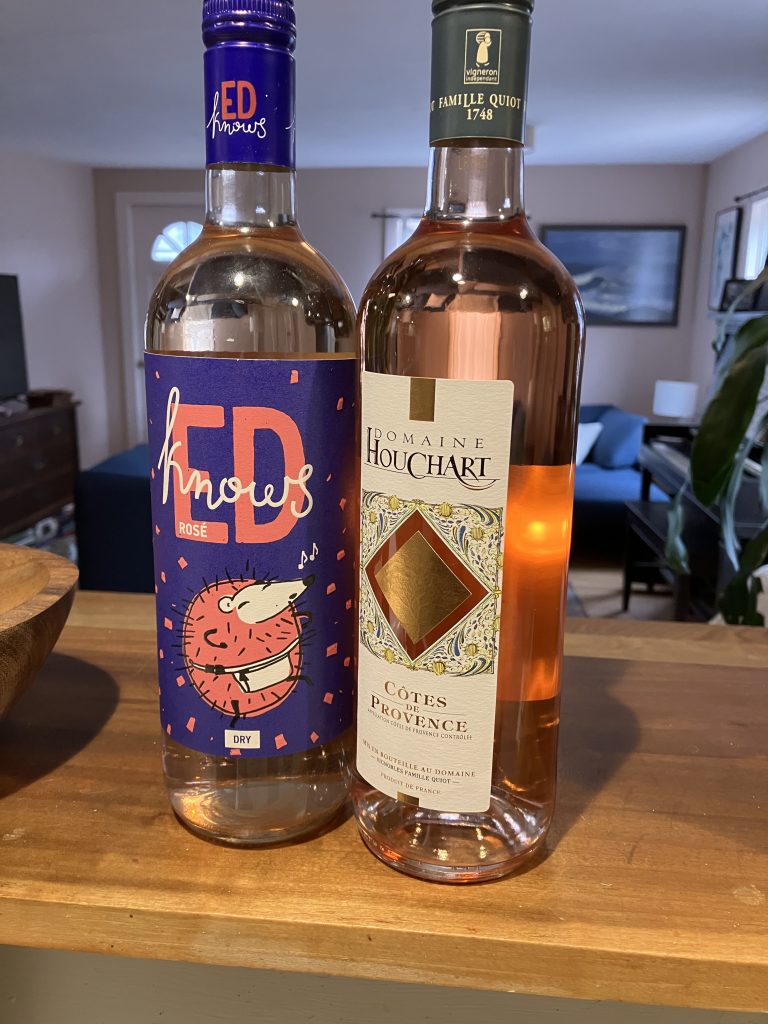
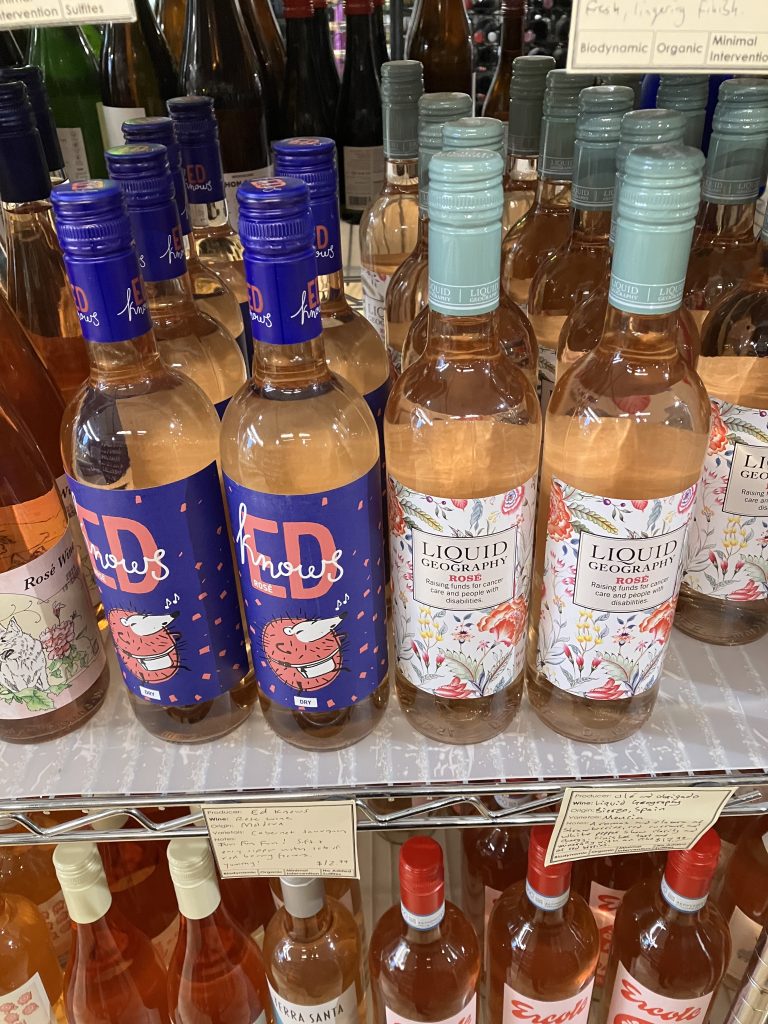
Alisa Inderieden, aka The Yankee Sippah, level one sommelier at State Street Fruit Store Deli Wines & Spirits in Northampton, says, “Personally, I’ve been loving a little rosé from Moldova called ‘Ed’ wines. It’s made from Merlot, and for $11.99, it’s a total winner. And scan the QR code on the label!”
I bought a bottle and scanned the code. It leads to a cute website, edknows.wine, where the titular Ed — an animated hedgehog — guides you through the selection. The wine itself is also inexpensive and great. Dry, with a “strawberry-meets-fleshy-peach” profile, it is a total bargain from an underappreciated yet historic wine region.
Another reason for rosé may be your own body chemistry. One of the wine professionals I spoke with can no longer digest red wine. They say that the limited skin contact that makes rosé pink rather than red must move the wine into a “liminal digestive zone” that makes it tolerable for those who can’t drink reds anymore. Maybe it’ll work for you, too.