A local music retailer I know recently said that he had not lost enough money running a store, so he decided to start a record label. Perceived as a thankless and difficult job in any era, running an independent record label in the 21st century means facing innumerable challenges, from the plight of struggling mom-and-pop record stores to file sharing to the state of the economy. It takes a certain disposition, coupled with a strong will, to beat back the tide.
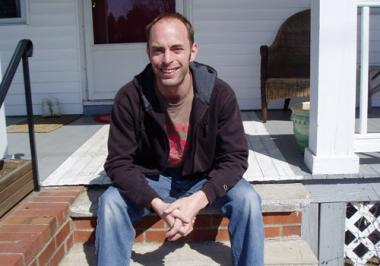
Enter Rick Pierik, proprietor of Easthampton-based Nine Mile Records. For him, motivation lies in finding exciting bands to release and promote, along with the satisfaction of running his own business. Rick's home near Mount Tom serves as label headquarters and warehouse. The Advocate spoke with Rick recently about the cost of postage and why he feels like a salmon.
Valley Advocate: What's your musical background?
Rick Pierik: I've been playing live music—drums—since I was 16, in clubs. After college I lived in Boston from 1995 to 2004, and was the drummer in six or seven bands, including Los Diablos, who had a fairly strong Pioneer Valley and Vermont fan base.
Why did you start a record label?
I was always the guy in the band who booked the shows, tallied the money, hung the posters and did most of the grunt work to make things happen. I started Nine Mile Records to add some legitimacy to my work and to act as an umbrella for all the bands I was working with. There's strength in numbers. But it wasn't until 2003, when my wife and I had a child and moved out to Easthampton, that I began using the label as a way to stay in the music world. I wasn't gigging much anymore and wanted to keep the momentum going with all of the projects I had put time into.
I didn't actually start Nine Mile Records, though. It was started in 1986 by some high school friends of mine when their band put out an album. When my band was ready to do the same the next year, we borrowed the moniker. When I was searching for a name years later, I remembered that title and phoned up those old friends and asked them if I could use it. I don't think they thought I'd actually start a legitimate business.
I understand Nine Mile is more than a strict issuer of physical releases.
Nine Mile functions a little differently than most traditional labels. I work primarily with artists who are gaining big regional attention, but haven't broken into the national scene yet. Most of them come to me with some level of professional backing—a manager, a booking agent or a publicist. I help them create a plan for their next release and try to fill in whatever components they are missing by either linking them up to appropriate outside agencies or by doing it myself. I'm not just concerned with distributing and promoting releases but with management, booking, radio airplay, press, podcasts, you name it. I'm kind of like a utility infielder. I've even filled in on drums.
How many Nine Mile releases are there?
The old Nine Mile Records put out five releases. Since 1996, I've put out an additional 24 titles, plus three label compilations. I have three or four more due out this year.
What does your intern program entail?
When I lived in Boston, we had interns everywhere. Since moving out here, it's been a struggle to find people who want to get this kind of entry level music industry experience. I don't know if I'm competing with paid internships, or if the interest isn't there anymore. But because of the way the label functions, an intern at Nine Mile has the opportunity to learn how every facet of the music industry works: distribution and promotion, radio airplay, tour publicity, licensing. Also, because it's such a small outfit, we can tailor the internship to really get at certain skills a person wants to learn or develop. And I've finally caved in and budgeted a small stipend for the right candidate if they can commit to a certain number of hours in a given semester.
How is it different operating in Easthampton as opposed to Boston?
Did I mention a lack of intern candidates? First of all, we have a much bigger house here, so I finally have a dedicated office. Plus much more room for warehousing. I don't remember any mountain views in Boston, either, so that's nice.
What's the best part of being a record label head honcho?
Being continually surrounded by great music. It's really inspiring. Plus you have a great excuse to go to festivals and music events and then write them off.
Who are your all-time favorite bands?
Until 1984, it was The Police. I guess I stuck with that one as long as I could. High School brought Split Enz, The Pretenders, Midnight Oil, REM, anything that vaguely passed for alternative music. Then I became a college DJ and all bets were off. These days I can't really answer that, although I've been very drawn to Shara Worden and her My Brightest Diamond project. I went through a big Calexico phase recently as well. And a new band in San Francisco called the Botticellis really gets me.
How is Nine Mile affected by some of the current industry concerns?
It's pretty crazy. I feel the "new dawn" is finally getting here after all the hype. Record stores have been struggling for a while, but now No Depression and HARP magazines just up and folded out of the blue. Like I said, I work with artists who already have pretty defined niches. I also only look for bands I think can deliver on their live show. As my business plan picks up more on that end and less on retail, I hope it will compensate. I'm also getting more licensing offers for Nine Mile artists, which helps a little. The biggest thing that hurt me last year, however, was the postage increase. In fact, it damn near put me under. My costs almost doubled. And it hurt, because the Postal Service had been telling me for months that prices for my bulk mailings were going to go down. But because of the size and shape of CDs, they actually went up.
Do you sometimes feel like a salmon heading upstream?
Yes. In fact, I often use that analogy.
What releases and events are on the horizon for Nine Mile?
Kathleen Haskard from the UK released Don't Tell stateside on April 15. It's a dark folk-noir kind of thing that was produced by Chuck Prophet. I'll also be putting out Matt Hebert's next album, The Deep North, under his moniker Haunt. We're going to press a small run of vinyl this spring or summer and then do a CD release in September. Matt was one of the first Valley musicians I met back in the Los Diablos days, so it feels great to work with him. And this record is a real departure for him sonically. He recorded the songs with Jose Ayerve from Spouse, and Jose really got him to expand his palette. Lots of big guitars, feedback and heavy drums.
I also put together a semi-annual music series in Boston called Twisted Roots that's slightly eccentric roots-based bands done in cabaret fashion with a host. The next one is May 9 at The Lizard Lounge in Cambridge with Miss Tess, The Wiyos from NYC and Josh Lederman from Los Diablos with his new ensemble, The Cambridge-Somerville All Stars. It'll be hosted by yodeling banjo player Curtis Eller. It's been very successful in Boston, and hopefully when Flywheel reopens I'll be able to bring the series out here."