
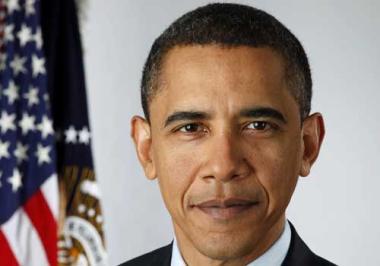
When November 5, 2008 dawned and Barack Obama had gained the title "president-elect," a fascinating new feeling arrived. Finally, the horrid excesses of the Bush years could be laid to rest in the trash heap along with so many other high points of American history, like McCarthyism and segregation.
We got lucky, considering that, after George W. Bush, a well-trained circus dog would have seemed like a major step up. Obama is clearly much more than good in historical context. He is everything a good president should be: extraordinarily bright, likeable, well-spoken, often open about his motives and, most importantly, focused on what most Americans want instead of what rich Americans want. It feels like the adults are back in charge.
Obama has done some wonderful things, and has repeatedly proven himself a friend to those of us who seek a nation of laws, not men. It was a promising bit of sunlight when the Obama administration recently released Bush-era Department of Justice memos trying, horribly enough, to set up a legal framework to okay that most un-American of ideas: torture. We need just that kind of unflinching look at how much damage Bush did to the bedrock of American ideals (all while he publicly said just the opposite).
So what exactly is going on when staunch Bush-hater Keith Olbermann is launching diatribes against Obama? Why are the ACLU and the Electronic Frontier Foundation beside themselves with apoplexy about the same man who was, not so very long ago, being decried as a liberal-socialist-Marxist-Kenyan-Indonesian usurper by frothing conservatives?
The short answer: while President Obama is doing all those wonderful things, at the same time he is committing and even surpassing the Bush administration's biggest sin. Granted, the Bush administration sin list is varied and breathtaking, from torture to warrantless domestic spying and misleading a nation to war. But the lynchpin of the operation was designed to keep the extent of all the other wrongdoing from the prying eyes of ordinary Americans (the same folks in whose names those sins were being committed in the first place). In case after case, from the disturbing allegations of former FBI translator Sibel Edmonds to cases touching on the practice of extraordinary rendition, the Bush administration invoked the "state secrets privilege."
The first case of its use illuminates the concept—and the problem it creates. Dan Froomkin of the Washington Post explains: "The government lied in the 1953 Supreme Court case that established the government's right not to disclose to the judicial branch information that would compromise national security. The widows of three civilian engineers who died in a military airplane crash sued the government for negligence. The government refused to turn over records, citing national security. But some 50 years later, when the records in question were made public, there were no national security secrets in them, just embarrassing information establishing the government's negligence."
The central problem with the state secrets concept is clearly that the assertion by the executive branch that disclosure of information would harm national security can be so thoroughly abused in just that fashion; the true nature of the information it hides can't be fully known.
For civil libertarians, Bush's repeated use of the state secrets privilege seemed like just another thumbing of the nose at quaint notions like government by the people, another entrenching of Bush (or any other executive) as something remarkably like a dictator. Secrecy is plainly the enemy of democracy.
Liking a politician should never equal deification in a real and mature democracy like ours at least purports to be. It's difficult to have to turn the corner from relatively uncomplicated support for Obama to a view that incorporates a terrible sin among all the great things he's doing. But that is the price of being a participant in democracy, so it must be done—when travesties of this magnitude occur, it would be undemocratic to sit silent.
Candidate Obama said this on his campaign website under "The Problem" in the "Ethics" section: "The Bush administration has ignored public disclosure rules and has invoked a legal tool known as the 'state secrets' privilege more than any other previous administration to get cases thrown out of civil court."
Now President Obama is continuing the state secrets invocations of the Bush administration in three cases, and he has also trotted out an expansion of the claim so ludicrous Dick Cheney probably wishes he'd thought of it. Right now, the privilege is usually implemented when the judge in the case is convinced that its use is appropriate. The Obama Department of Justice has claimed that even that is no longer operative in the current Electronic Frontier Foundation lawsuit against members of the Bush administration for its warantless wiretapping. The DOJ argues that the mere assertion that state secrets are involved means the court case should be dismissed without even judicial review. It also claims that the only action that would make the government liable is its own "willful disclosure" of "intelligence information."
Americans would therefore have no recourse to address lawbreaking of any kind by a tyrannical administration who said their actions were state secrets. That is simply un-American, even if a gifted and trustworthy politician like Obama is in charge.
This is remarkable any time, but when the case in question involves one of the Bush administration's clearest examples of hubris, the warantless wiretapping program, it becomes yet more incredible. Any way you look at it, Obama is protecting Bush.
All of this raises some important questions: what exactly has the National Security Agency been doing to Americans with the wiretapping program? To put it another way: what is so damaging that an administration demonstrably devoted to transparency in so many other ways would risk losing many of its most ardent supporters to keep it under wraps?
But the most important question is this one—what are we going to do about it? There is at least a glimmer of good news: this president may listen when we speak up.